Why Pros Replace Both Garage Door Springs When Only One Breaks
It sounds like the oldest upsell in the book. One spring broke, so why is the quote for two? Here is the honest math, and the one case where the technician is wrong.
The technician had been in the garage for maybe four minutes when he said the sentence every homeowner dreads. You should really replace both springs while I am in here. The customer laughed out loud. Of course you would say that, he told me later. That is exactly what I would say if I were the one selling springs.
I understand the suspicion completely, because this trade has earned some of it. But this is the rare recommendation that survives the math. The springs on your door were installed on the same day, they have lifted the same weight the same number of times, and they are rated to wear out on roughly the same schedule. When one of them gives up, the other one is not a spare sitting in reserve. It is a countdown.
The short version
- Both springs share one cycle count, so they age together, cycle for cycle.
- A new spring beside an old one runs unbalanced and wears out faster.
- The second spring adds about $75 to $150 in parts while the door is already apart.
- A second failure later means a second full service call at full price.
- One real exception: a spring replaced recently, proven by a receipt.
Why Does Every Technician Recommend Both?
Because they have seen the sequel. A technician who replaces one spring on a two spring door gets a callback within the year more often than almost any other repeat visit. The surviving spring snaps, the homeowner pays a second trip charge and a second round of labor, and the total ends up well above what the pair would have cost on day one.
Shops do not push the pair because the second spring is where the profit hides. The part itself is the cheapest line on the invoice, usually $80 to $160 at supply cost for a standard torsion spring. They recommend it because the labor is already paid for. The door is apart, the shaft is exposed, and the winding bars are already out of the toolbox.
What Does “Matched Pair” Actually Mean?
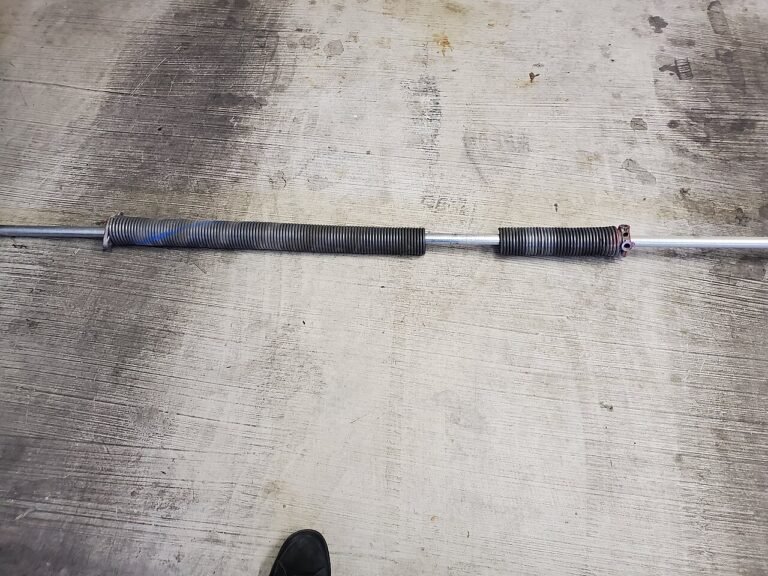
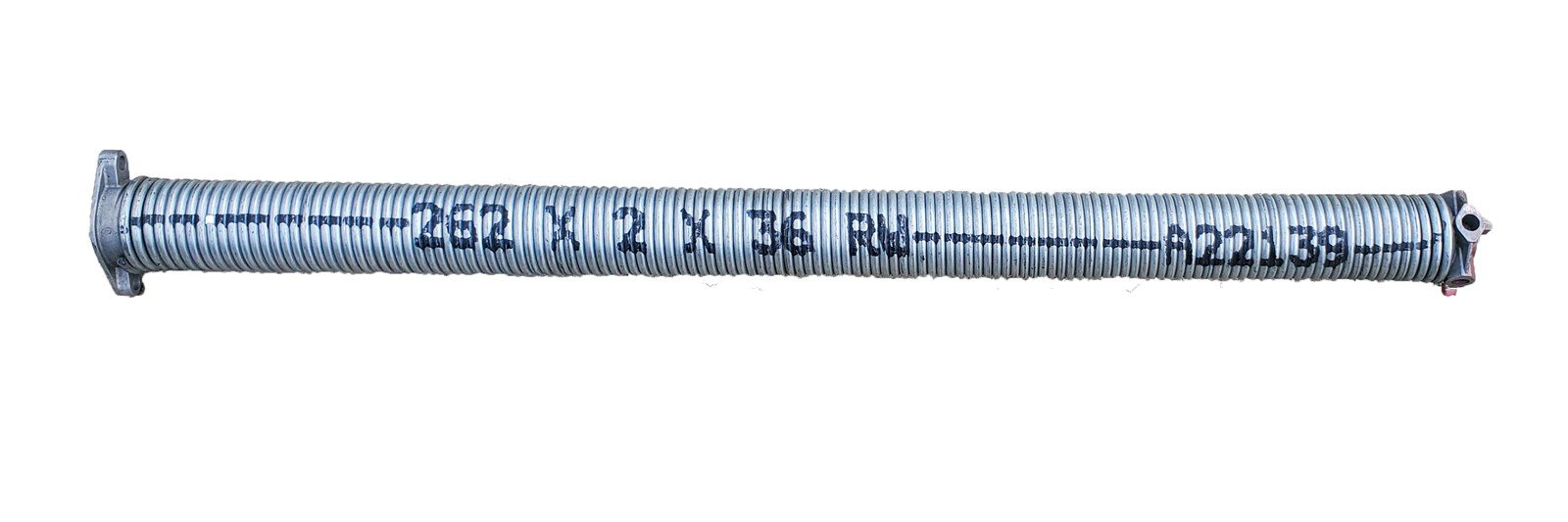
A matched pair is two springs with identical specifications: the same wire size, the same inside diameter, the same length, and mirrored wind direction, one left wound and one right wound. Together they share the lifting load evenly, each one carrying roughly half of the door’s weight on every cycle.
That sharing is the whole design. A garage door is balanced when the spring system, working as a unit, counteracts the door’s weight across its full travel. Manufacturers like Clopay rate springs as a system, and the door was balanced as a system on the day it was installed. Change one element and all of that balance math changes with it.
What Is a Cycle Count, and Why Does It Decide This?
One cycle is one full open and one full close. A standard residential spring is rated for about 10,000 cycles. A door that gets used four times a day burns through that rating in roughly seven years. High cycle springs are rated at 20,000 to 25,000 cycles and cost more upfront, which is a separate decision worth making while the door is apart.
Here is the part that settles the argument. Your two springs have never once worked different shifts. Every cycle in that count was shared by both of them, on the same days, in the same weather, under the same load. When one reaches the end of its fatigue life, the other is standing in almost exactly the same spot on the same curve. It has not been resting. It has been aging in lockstep.
What Happens If You Replace Only One?
The new spring is strong and the old spring is tired, and the door knows the difference even if you cannot see it yet. The fresh spring takes more than its share of the load, which wears it faster than its rating assumes. The door can drift slightly crooked in the opening, cables wind unevenly on their drums, and the opener works harder on one side of every single cycle.
Cables winding unevenly need checking — see our garage door cable repair in Rochester, NY.
Then the old spring finishes the story, usually within three to eight months. Now the door is down again, the car might be trapped again, and you are paying full price for a visit that could have been one small parts line on the first invoice.
Show Me the Math: One Now, or Two Now?
Fair enough, let us put real numbers on it. Most homeowners report that adding the second spring during the same visit costs about $75 to $150 extra, because it is a part, not another job. The technician is already there, the door is already apart, and the tensioning happens once for the pair.
Compare that with the sequel. A second failure means a second service call, and most homeowners report paying $300 to $500 for a standalone single spring replacement with labor included. So the real choice is roughly a hundred dollars now against three to five hundred later, plus a second morning of a dead door and a trapped car.
| Option | What you pay for | Typical range |
|---|---|---|
| Second spring added today | Parts only, labor already on site | $75–$150 |
| Second spring replaced later | A whole new service call with labor | $300–$500 |
Typical ranges as of 2026, from homeowner-reported quotes. Heavy wood doors and high-lift setups run higher.
I laid out the full numbers in what a spring replacement should actually cost, including where the split between parts and labor usually lands on an honest invoice.
When Is Replacing Just One Actually Fine?
There is one clean exception, and an honest technician will name it before you have to ask. If one spring was replaced recently, say within the last year or two, and you have a receipt or invoice showing it, then the pair is no longer the same age and the logic flips. Replace the older broken one and let the young one keep working.
There is a second, rarer case. A nearly new spring damaged by an accident, like a door strike or a failed cable that chewed into the coil, has not lived a full fatigue life. And single spring doors exist, mostly on smaller single car doors, where the whole question never arises. Outside those cases, same age means same answer.
How Can You Tell Honest Advice From an Upsell?
Ask three questions. First, can you show me the old spring and explain its cycle rating? Second, what are the exact specifications of the pair you are installing? Third, what does the second spring add to this invoice as its own line? An honest technician answers with numbers and shows you the parts in his hands. An upsell answers with pressure and a deadline.
It also helps to know what separates a real pro from a call center before anyone is standing in your garage. And once the work starts, how a proper visit runs should be visible in the steps themselves, from the first inspection to the balance test to the final safety check.
Both Springs Questions, Answered
The questions homeowners ask when the quote says two springs and only one is broken.
Because both springs have worked every cycle together since installation day. A standard pair is rated around 10,000 cycles, and when one spring reaches fatigue failure, its partner is at nearly the same point on the same curve. Leaving it in place means running a strong new spring beside a tired old one, which leaves the door unbalanced. Most surviving springs fail within three to eight months, and then you pay for a whole second visit to do the job again.
Usually $75 to $150, because at that point it is almost entirely a parts cost. The technician is already on site, the door is already apart, and the shaft is already exposed. Compare that with most homeowners reporting $300 to $500 for a separate single spring replacement later, which includes a fresh service call and full labor. The pair during one visit is one of the few genuine bargains in this trade, and an honest quote itemizes it as its own clear line.
Yes, slowly. The fresh spring is stronger, so it shoulders more than half of the load, and extra load means extra fatigue on every cycle it runs. Its real world lifespan drops below the rating printed on the box. The door can also sit slightly uneven in the opening, winding its cables differently on each drum and making the opener strain. Nothing dramatic explodes. The system simply wears out of balance, and out of balance systems always consume their strongest parts first.
Start with the history you actually have. If the door and its springs were never serviced during your ownership, assume the pair is original and matched. Paint codes and light rust patterns usually match across a same age pair, and a technician can read the wire size markings on both winding cones. If a previous owner replaced just one spring, a receipt or an invoice sticker on the door frame often proves it. With no proof either way, treat them as the same age.
Probably not, and this is the honest exception to the rule. If one spring is genuinely young, with a receipt or invoice showing a recent replacement, then the pair is no longer the same age. Replacing the older broken spring restores the balance, and the young spring keeps working through its remaining cycles. A technician who insists on both anyway, after seeing your paperwork, is selling. A technician who checks the dates first is doing the job the right way.
You can, but it is the most expensive way to buy exactly the same outcome. The second job repeats everything from scratch: the service call, the labor, the tensioning, the balance test, the safety check. Most homeowners end up paying several hundred dollars more across two visits than the pair would have cost together in one. There is also the timing problem. The old spring picks its own schedule, and it tends to pick a morning when the car absolutely has to get out.
Yes, and the logic is identical. Extension springs also work as a matched pair, stretching along the tracks on both sides of the door. They share the same cycle count, and a tired one running beside a fresh one leaves the door pulling unevenly through every cycle. Extension springs are cheaper parts, often $30 to $60 each at supply houses, so doing the pair together costs even less. Every extension spring should also have a safety cable threaded through it, whichever visit handles the work.
Standard springs are rated around 10,000 cycles, which lasts most households seven to ten years. If your garage is the main entrance to the house and the door cycles six or more times a day, ask about high cycle springs rated at 20,000 to 25,000 cycles. They cost more upfront, often $50 to $100 more for the pair, and they can double the time before you think about springs again. Whatever you choose, get the rating written on the invoice.
The Bottom Line
The both springs recommendation sounds like a sales line because sometimes, in the wrong mouth, it is one. But the physics does not care about the sales pitch. Two springs, one age, one shared cycle count, and a second failure that costs three to five times more than the part would have cost you today.
If your door is down right now, our garage door repair team in Rochester, NY will weigh the door, match the pair properly, and put the price in writing before any work begins. You can also see everything we fix on the homepage before you pick up the phone.
One Spring Down? Fix the Pair Once
One visit, a matched pair, one price in writing. No second service call hanging over you.
Call (866) 727-0060