Stop Spraying WD-40 on Your Garage Door — Use This Instead
That blue-and-yellow can under your sink is lying to you. Here is what actually keeps a door quiet, and the two sprays that do the job right.
Almost every garage has the same blue-and-yellow can on a shelf. When the door starts groaning at six in the morning, that can is the first thing people reach for. The squeak fades for a day, you feel like a genius, and then it comes back louder. A month later the door sounds worse than before. On Reddit, a thread titled “How to Undo WD40 on Garage Door” drew more than 170 comments from people living this exact story.
I will save you from becoming comment 171. WD-40 is a fine product. It is just not a garage door lubricant. Here is what it actually is, what to use instead, exactly where it goes, and the two spots you must never touch.
Wait, Isn’t WD-40 a Lubricant?
The name tells the story. WD stands for Water Displacement, and the 40 means it was the 40th formula the chemists tried. It was built to drive moisture out of metal and loosen rusted parts. The problem is the formula. Most of the can is solvent. It cuts through grime and old grease, which is why the door feels smoother for a day. Then it evaporates.
What remains is a thin film never designed to stay slippery under load, on a door that cycles on steel hardware several times a day. WD-40 leaves the scene.
What Does WD-40 Actually Do to Door Hardware?
Three things, all bad. First, it dissolves the grease that belongs there. The grease on hinge pins and roller bearings took years to wear in, and one enthusiastic spray session washes it out. Second, it dries. Within days the parts run nearly dry, metal on metal. Third, the leftover residue traps dust, and garage air is full of it. That mix becomes a gritty paste that grinds the parts it was supposed to protect.
That is why the door gets louder a week after spraying. You did not fix the friction. You scheduled more of it. On r/HomeImprovement, a 40-plus comment thread on door lubrication reached one consensus: silicone or lithium, never the blue-and-yellow can. Over on r/Tools, the top-voted answer to “WD40 or lithium grease” was blunt: WD-40 is more of a solvent.
So What Should I Spray Instead?
Two products, and you probably need only one of them. A silicone-based spray lubricant or a white lithium grease spray. Clopay’s own lubrication guide names both, and warns readers away from WD-40 for the same dust-attracting reason. On the shelf, look for 3-IN-ONE Professional Garage Door Lubricant, which is blended for this exact job, or WD-40 Specialist White Lithium Grease. Yes, it is made by the WD-40 company, but it is a completely different product: a real lubricant. Blaster makes a well-regarded silicone spray too.
Silicone or White Lithium: Which One Wins?
Neither wins outright. They do different jobs. Silicone spray is light, clean, and safe on most materials. It is my default for hinge pins, roller bearings, and general moving parts. It does not gum up and suits nylon and rubber. White lithium grease is thicker. It clings to metal under load, making it the better pick for torsion spring coils, the opener chain or screw drive, and hard-working steel-on-steel contact.
Buying one can today? Grab the silicone spray. If your springs groan or your chain-drive opener chatters, add white lithium grease as can number two. What matters is not the brand. It is that the product is an actual lubricant, not a solvent in disguise.
Exactly Where Does the Lube Go?
With the door closed and the opener unplugged, hit these spots with short bursts and wipe the excess. A light film is the goal. A dripping mess collects dirt.
- Hinge pins. The pivot points where each door section flexes. One quick shot per hinge.
- Roller bearings. On metal rollers, spray where the stem meets the wheel. On nylon rollers, lube the stem only.
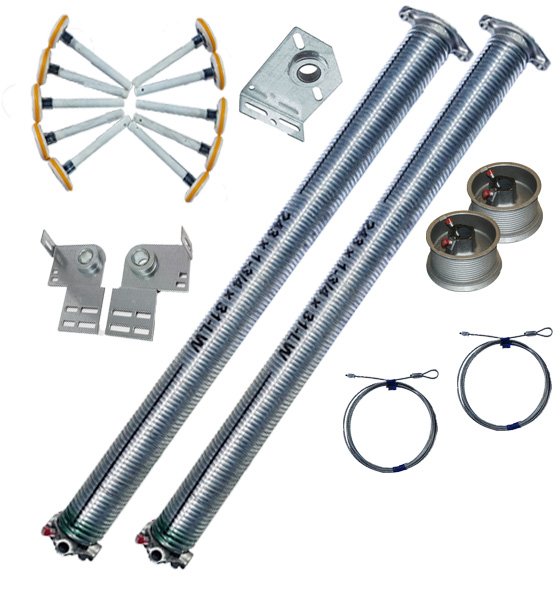
- Torsion springs. Spray along the full length of the coils above the door.
- Bearing plates. The end bearings holding the spring shaft, both sides.
- Extension spring pulleys. If your door uses side-mounted extension springs, lube the pulley wheels.
- The lock bar. The manual lock inside the door.
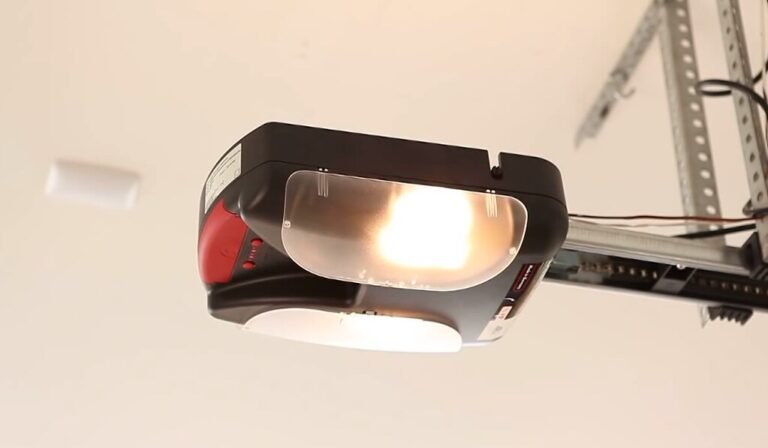
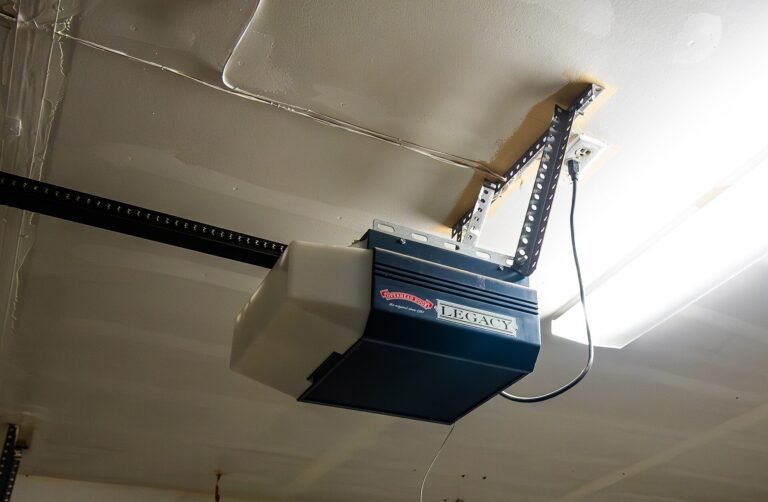
- The opener. White lithium on a chain drive or on the screw of a screw-drive opener. Belt drives need no lube.
- The arm pivot. Where the opener arm meets the door bracket.
Clopay’s lubrication guide covers these same points and is worth a look before your first attempt. As for timing: twice a year, spring and fall, fifteen minutes. Pair it with the seasonal tune-up every door should get, a balance test, a hardware check, a sensor wipe, and a look at the weather seal. Doors that get this run quieter and surprise their owners less.
Which Spots Should Never See a Drop of Lube?
Two places, and people get both wrong constantly. First, the tracks. Rollers are supposed to roll inside the tracks, not slide on grease. Lubricant in the track channel makes rollers slip and turns the channel into a dirt magnet that eventually binds the door. Wipe the tracks clean with a damp rag and leave them dry.
Second, the photo-eye sensors near the floor. Those lenses need a clear line of sight to each other. An oily film can weaken the beam and make the door reverse for no reason. Clean them with a soft dry cloth only. One more: do not grease nylon roller wheels themselves. The nylon is self-lubricating by design. Grease just gives grit something to stick to.
I Already Sprayed WD-40 Everywhere: Can I Undo It?
Yes, and you are not the first. Wipe every sprayed part with clean rags to pull off the residue. For heavy or gummy buildup, put some automotive brake cleaner on a rag and wipe the parts down. Do not spray it straight at the door. Let everything dry fully, then re-lubricate with silicone spray or white lithium grease. Pay special attention to the springs. A dry torsion spring wears faster, and spring wear can turn into a real repair bill. If the door still sounds rough after a proper clean and lube, the damage was already there before the WD-40 arrived.
Will Proper Lubrication Actually Quiet My Door?
Usually, yes. Dry hinge pins and roller bearings cause most squeaks and groans, and fresh silicone shuts them up fast. But lube has honest limits. It will not fix rollers with flat spots, a failing torsion spring, or loose hardware. And it will not fix an opener with stripped gears. Think of lube as the first test, not the cure for everything. Spray, cycle the door a few times, and listen. If the noise is gone, you win. If it stayed put, the door just told you which part is dying.
A failing torsion spring needs a pro — see our garage door spring repair in Rochester, NY.
An opener with stripped gears needs a pro — see our garage door opener repair in Rochester, NY.
When Should I Stop Spraying and Call Someone?
If a proper lube pass does not fix the noise, or if you spot frayed cables, a spring with a visible gap in its coils, or a door that suddenly feels heavy in manual mode, put the can down. Those are not lubrication problems. Cables and springs live under serious tension, and DASMA’s garage door safety tips say plainly that spring and cable work belongs to trained technicians. When you call our garage door repair team, every visit is the same: full inspection, one price agreed first, the fix, and a safety test before we leave. You can see exactly what happens during a visit before you ever pick up the phone.
Spotted frayed cables mean a pro job — see our garage door cable repair in Rochester, NY.
The blue-and-yellow can is not the villain. It is a good product doing a job it was never hired for. Your door needs a lubricant that stays slippery under load: silicone spray or white lithium grease, applied twice a year to the right points and kept away from the tracks and sensor lenses. Fifteen minutes, done. If the door still talks back after a proper lube job, bring in a pro instead of a bigger can. That is why homeowners choose us: pricing discussed before work begins, the right parts on the truck, and a full safety test on every visit.
Lubrication Questions, Answered
“Once” is how every bad story starts. One spray will not destroy your door, but it starts the same cycle: solvent cuts the existing grease, evaporates within days, and leaves a residue film that grabs dust. If you already did it, wipe the parts down and apply a real lubricant like silicone spray. The door will forgive one mistake. Make it a habit and the hinges will bill you for it.
Yes. This is the confusing one. WD-40 Specialist White Lithium Grease is a genuine lubricant made by the WD-40 company, and it is a solid choice for springs and metal-on-metal parts. The product to avoid is the original blue-and-yellow WD-40 Multi-Use Product, which is a solvent and water displacer. Same brand, completely different chemistry. Read the label, not the logo.
Spray is light and penetrating, made for hinges, roller bearings, and parts that need to stay clean. Grease is thicker and stays where you put it, better for heavy-load metal contact. For a garage door, the spray handles nearly everything. Save grease-style products for the springs and the opener drive. Both beat the original WD-40 can, which is neither.
No. Wipe them clean with a damp rag and leave them dry. Rollers need to roll in the track, not slide on grease. Lubricant in the channel causes rollers to slip and gives dust something to stick to, which eventually makes the door run worse. Clopay’s maintenance guidance says the same: lube the roller bearings, keep the tracks clean and dry.
Chain-drive openers appreciate a light coat of white lithium grease on the chain now and then. Screw-drive openers need a dab of grease on the screw. Belt-drive openers need nothing at all. The rail itself should stay clean, and keep lubricant away from the photo-eye sensors and the logic board. When in doubt, check your opener manual. LiftMaster, Chamberlain, and Genie all publish maintenance guidance for their models.
Please do not. Kitchen oils go rancid, turn gummy, and attract dust faster than almost anything else you could spray. They also offer almost no protection against metal wear. A cheap can of silicone spray from the hardware store outperforms a pantry raid every time. If you are standing in the garage right now with a squeaky door and no proper lube, drive to the store. Your hinges will wait.
Wipe everything with clean rags first and get the worst of it off by hand. For stubborn buildup, spray automotive brake cleaner onto a rag, not directly onto the door, and wipe the parts down. Work with the door closed and the opener unplugged, and let everything dry fully. Then apply silicone spray or white lithium grease to the proper points and cycle the door a few times to work it in.
Then the noise was never a lubrication problem. The usual suspects are worn rollers with flat spots, a tired torsion spring, loose hinge bolts, or an opener with worn gears. You can inspect rollers and hardware yourself: look for cracked wheels, wobbling stems, and bolts you can turn by hand. Springs and cables are a different story. They hold serious tension, and anything involving them belongs to a trained technician, not a Saturday project.
Yes, it is one of the easiest good choices on the shelf. It is a silicone-based spray blended specifically for garage door hardware, with the straw nozzle that lets you hit hinge pins and bearings without coating the whole garage. It is not magic. Any quality silicone spray or white lithium grease does the same job. But if you want a can that removes all doubt, that is the one.
Door Still Noisy After a Proper Lube Job?
Then it is not a lubrication problem. One call gets you an inspection, one price agreed first, and a full safety test.
Call (866) 727-0060