What a Garage Door Spring Replacement Should Actually Cost
One snapped spring. Three quotes. A $900 spread between them. Here is how to read a spring quote like a technician, so you pay a fair price and never fund someone’s boat payment.
A neighbor of mine heard what sounded like a gunshot in his garage at six in the morning. The door would not budge. He called three companies before lunch and got three quotes: $349, $575, and $1,150. Same door. Same broken torsion spring. Same ten-minute diagnosis.
He asked me which quote was the scam. The honest answer: possibly none of them, possibly all of them. The part itself costs less than a dinner out. What you are really paying for is knowing exactly which spring fits your door’s weight, wound to the correct tension, installed without anyone getting hurt. The gap between a fair price and a fleecing lives in details most homeowners never learn to check.
Homeowner forums tell the same story on repeat. One guy was billed $1,200 for a spring job. Another paid $375 for the same work. When you cannot tell a fair price from a bad one, you either overpay or you pick the cheapest quote and get the wrong spring. This guide fixes that.
The short version
- A standard torsion spring replacement typically runs $300 to $550 all-in, as of 2026, based on homeowner-reported quotes.
- The spring itself usually costs $80 to $300 in parts. Labor is the bigger slice of every honest bill.
- Extension springs run cheaper. A two-spring door costs more in parts, barely more in labor.
- On a two-spring door, replacing both springs at once is standard practice, not an upsell.
- Get the total price in writing before any work starts. Always.
Why Do Spring Quotes Range From $300 to $1,200 for the Same Job?
Because you are not buying a spring. You are buying a business model. A solo technician in a stocked van has almost no overhead, so $350 covers his costs with a fair profit left over. A national franchise pays for dispatchers, call centers, and ads that cost a fortune every time someone searches for help. That company needs far more per visit just to survive.
The $1,200 quote that went viral in a homeowner forum broke down as roughly $900 for two springs plus $100 in labor, a parts markup of about five times wholesale. At the other end, $300 to $390 quotes from independent techs are common and usually fair for a standard door.
The spread exists because springs are invisible to buyers. You cannot see wire gauge or cycle rating the way you can see a new tire, so the price starts reflecting what the seller thinks you will pay before you call someone else. That is why what separates a real pro from a call center comes down to transparency, not branding.
What Does the Spring Itself Cost vs the Labor?
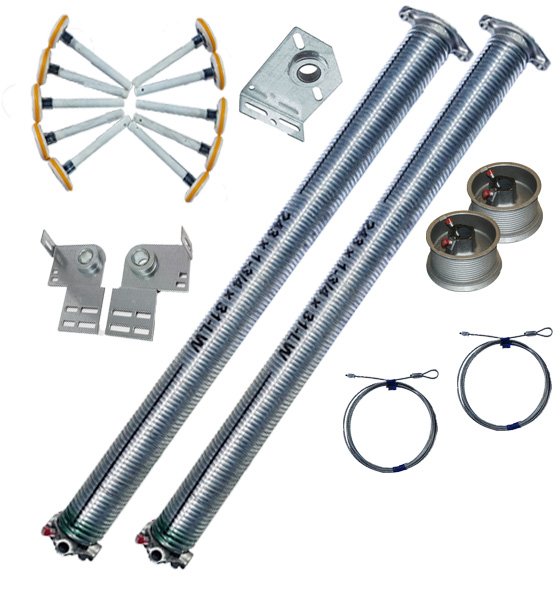
A standard residential torsion spring costs a pro roughly $80 to $160 at supply houses. One homeowner thread showed a supply-only price of $154 per spring with no warranty. Extension springs are cheaper, often $30 to $60 each. For a typical two-spring torsion door, the parts in the technician’s hands represent maybe $150 to $300 of real cost.
Labor is the bigger number on every legitimate invoice, usually $150 to $350. The tech stocks thousands of dollars of matched springs so your job finishes in one visit, plus the winding bars, the experience to tension a spring that stores bone-breaking energy, and the insurance for the day it goes wrong.
A healthy bill is roughly 60 to 70 percent labor and expertise, 30 to 40 percent parts. When parts are 80 percent of the bill, you are looking at markup, not value.
Torsion or Extension: Does the Spring Type Change What You Pay?
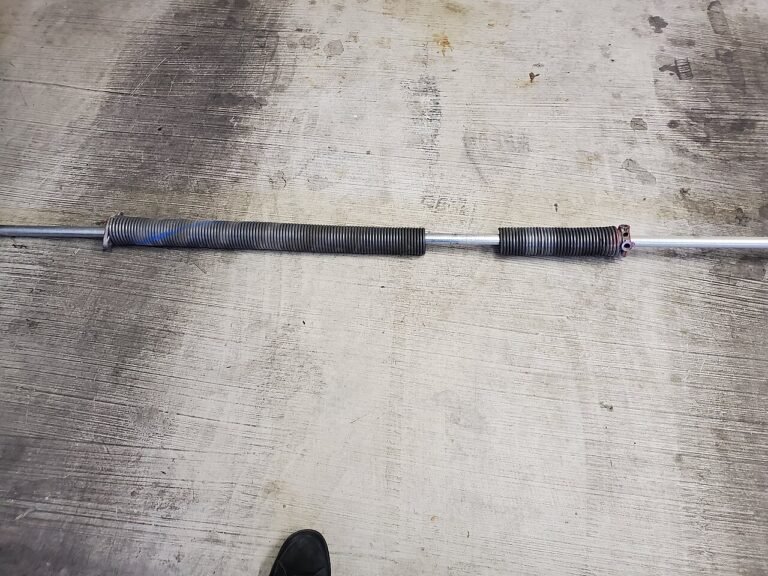
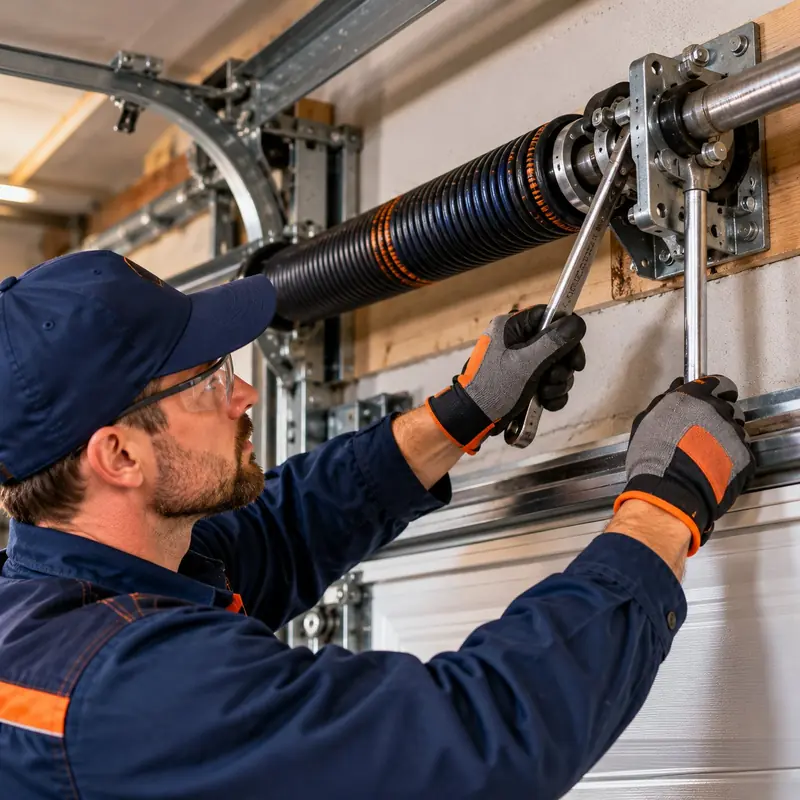
Stand inside the garage and look up. Thick coils on a metal shaft above the door opening means torsion springs. Long, thinner springs alongside the horizontal tracks means extension springs. Manufacturers like Clopay use both types, so either one is normal.
Torsion springs cost more in parts but are the better design. They twist instead of stretching, which gives smoother operation and longer rated life. Extension springs are cheaper and common on older doors, but they must have safety cables running through them. If an extension spring snaps without one, the broken piece becomes a projectile.
On price, a torsion spring job typically lands between $300 and $550, while an extension spring pair often comes in at $250 to $450. The labor is similar. The parts are where the difference lives.
Should Both Springs Be Replaced When Only One Snapped?
On a two-spring door, yes. Both springs were installed on the same day and have lifted the same door the same number of times, usually toward a rating of about 10,000 cycles. When one fatigues to the breaking point, the other has identical mileage.
Replace only the broken one and the pair runs unbalanced. The new spring carries extra load, and the old one snaps three to eight months later. Now you are paying for a second trip and a second round of labor. The extra parts cost for the second spring is typically $75 to $150. The second visit you avoid would cost triple that. The only exception is a spring replaced recently with a receipt to prove it.
What Else Ends Up on the Bill?
Lift cables are the most common add-on, and usually a legitimate one. They do the actual lifting while the spring counterbalances, and they wear on the same schedule. A frayed cable on a door with a fresh spring is a comeback waiting to happen. Cables add roughly $40 to $80 in parts with minimal extra labor since the door is already apart.
A frayed cable with a fresh spring needs a pro — see our garage door cable repair in Rochester, NY.
Bearings, rollers, and hinges are judgment calls. If rollers are original to a fifteen-year-old door and grinding, replacing them now is smart money. If they spin smooth and quiet, leave them alone. Every add-on should be a part you can see with your own eyes, so ask the technician to show you the fraying. A pro walks you to the door and points. A salesperson just keeps talking.
Is the Cheapest Quote Ever the Right Call?
Sometimes the cheapest quote is the most expensive one you will ever accept. A spring has four specifications that must match your door: wire size, inside diameter, length, and wind direction. Get any of them wrong and the door still moves, just badly. Too strong and it slams down and overworks the opener. Too weak and the door stays heavy until the opener gears strip.
The bargain installer who never measures your door or asks its weight is guessing, and a wrong guess burns out the opener, turning a $400 spring job into a $900 spring-plus-opener job. Ask every bidder: what size spring are you installing, and how did you match it to my door? The good ones answer with numbers. The bad ones answer with confidence.
What Are the Red Flags in a Spring Quote?
Check any quote against this list before approving anything:
- The price appears after a “free 21-point inspection.” Inspections that manufacture urgency are a sales funnel, not a service.
- Standard springs priced at $400 or more each. That is markup territory.
- “Your cables are about to snap” with nothing shown to you. Fraying is visible. If they cannot show you, it does not exist.
- No written price before work begins. Verbal quotes evaporate the moment the invoice prints.
- Full payment demanded upfront. A deposit for special-order parts is normal. Full payment before a wrench turns is not.
- “This price expires when I leave.” Pressure is what you use when the price cannot survive comparison.
- No mention of cycle rating or spring specs. Assume the cheap spring at the premium price.
One red flag is a warning. Two is a pattern. Three means call someone else.
What Should a Fair Quote Look Like?
A fair quote has five things: the spring specifications (wire size, inside diameter, length, cycle rating), clarity on single versus pair and whether cables are included, one total price in writing before work starts, warranty terms for parts and labor, and a clear arrival window.
That is the whole list. No inspection theater, no expiring prices, no mystery line items. It is also exactly how a proper visit runs, from the full inspection through a price discussed first to the final safety test. When a company shows you its process before you ask, that is usually the company worth hiring.
| Job | Parts (typical) | Labor (typical) | All-in typical range |
|---|---|---|---|
| Single torsion spring | $80–$160 | $150–$300 | $300–$500 |
| Torsion spring pair | $150–$300 | $150–$350 | $400–$650 |
| Extension spring pair | $60–$120 | $120–$250 | $250–$450 |
| Springs + lift cables | $180–$350 | $150–$350 | $450–$800 |
Typical ranges as of 2026, from homeowner-reported quotes in 2025–2026. Heavy wood doors and high-lift setups run higher.
Spring Cost Questions, Answered
The questions homeowners ask most after the bang in the garage.
As of 2026, a single torsion spring typically runs $300 to $500 all-in, and a pair runs $400 to $650. Extension spring pairs are usually cheaper at $250 to $450, and adding lift cables puts most jobs between $450 and $800. Quotes far above these ranges should come with line-item justification, and quotes far below them should come with spring specifications.
Most visits wrap up in one to two hours from arrival to final test, covering inspection, installation, tensioning, a balance test, and cleanup. Adding cables or rollers adds about thirty minutes. If someone calls it an all-day job for a standard residential door, ask what exactly takes all day.
Do not try. Without spring assist, a standard double door weighs 150 to 250 pounds. Forcing it risks serious back injury, and running the opener against that weight strips its gears or bends the top panel. If your car is trapped and the door moves freely, two adults can lift it together, but prop it fully open, never stand under it, and then call a professional.
Stand inside the garage and look up. Thick coils on a shaft above the door opening means torsion springs. Long, thinner springs alongside the horizontal tracks means extension springs. Torsion springs twist, last longer, and run smoother. Extension springs stretch, cost less, and must have safety cables through their centers.
Most residential springs are rated for about 10,000 cycles, roughly 7 to 10 years at four uses a day. Heavy use wears them faster. If your garage serves multiple drivers, ask about high-cycle springs rated for 20,000 to 25,000 cycles. They cost more upfront but often double the service life.
Cold is a stress test for fatigued steel. Low temperatures make spring wire brittle, metal contraction changes tension, and old lubricant stiffens. A spring near the end of its cycle life often picks the coldest week to let go. In Rochester, February is unofficially spring-break season.
If they show fraying, rust, or kinking, absolutely yes. Cables wear on the same schedule as springs, and replacing them while the door is apart adds mostly parts cost. If the cables look clean and the door is under ten years old, they can stay. Ask the technician to show you the cables before you decide.
The opener was designed to guide a balanced door, not dead-lift one. Running it against a broken spring overheats the motor, strips the gears, and can bend the top panel. That turns a $400 spring job into a spring plus opener plus panel repair. Stop using the opener immediately if you suspect a broken spring.
The Bottom Line
You now know the typical ranges as of 2026, that parts are the smaller slice and labor the bigger one, and to replace both springs on a two-spring door with specifications in writing. That knowledge is the difference between the $375 fair bill and the $1,200 horror story.
If your spring just snapped, call our Rochester garage door team for pricing before work begins. The price is agreed before any work begins and never moves after that. You can start here or just pick up the phone.
Spring Snapped? Get a Fair Price Agreed First
One call. Price in writing before any work starts. Most spring jobs finished in a single visit.
Call (866) 727-0060