
My Garage Door Cable Snapped — Why This Isn’t a DIY Fix
A snapped cable looks like a twenty-minute fix. It is one of the most dangerous jobs on the door. Here is what is happening, what not to touch, and what a safe fix looks like.
“It sounded like a gunshot in my garage.”
That is how the call usually starts. Saturday morning, someone hits the remote and hears a bang. The door jerks, tilts sideways, and refuses to move. Then they spot it: a steel cable dangling loose along the track, or piled in a nest on the drum above the door.
And here is the thought that gets people hurt: “It’s just a cable. How hard can it be?”
I understand the instinct. A cable looks simple: no motor, no electronics, no mystery. I have watched confident DIYers, people who rebuild engines and remodel bathrooms, learn the hard way that this job punishes overconfidence.
A garage door cable never works alone. It is the last link in a chain that starts with springs wound tight enough to lift hundreds of pounds. This post covers what your cables do, how to confirm one snapped, why the fix is not DIY, and what a safe professional visit looks like.
What Do the Cables on a Garage Door Actually Do?
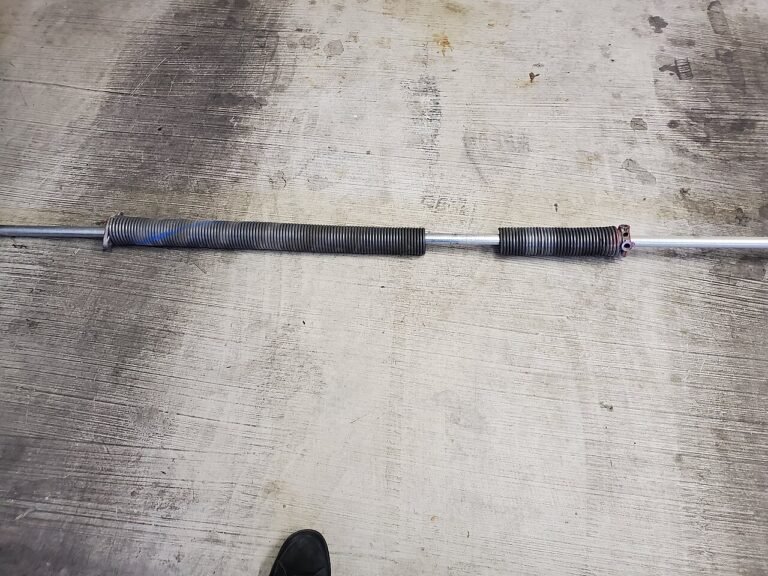
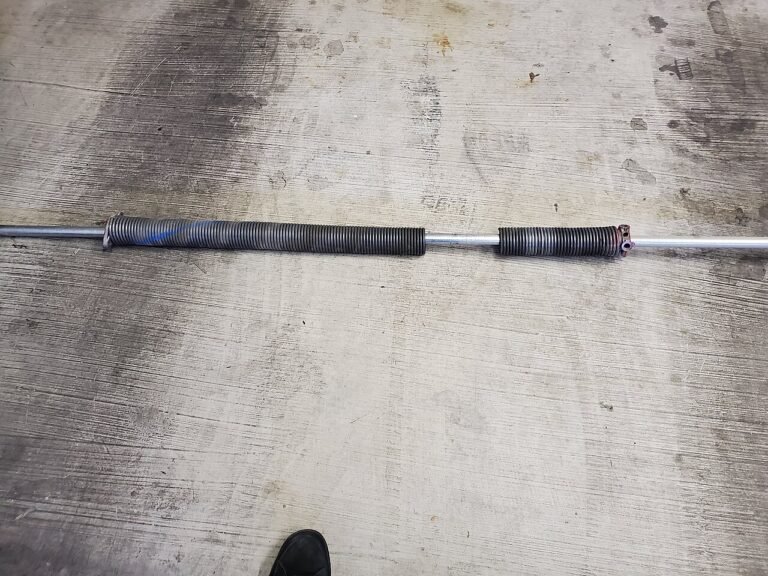
Think of springs as the muscle and cables as the tendons. On a standard torsion system, a steel shaft runs above the door with a cable drum on each end. Each lift cable bolts to a bottom bracket on the lowest panel, runs up the side of the door, and winds onto its drum. Opening winds the cables up as the springs do the heavy lifting. Closing lets cable back out in a controlled unwind.
On extension spring doors, cables run over pulleys at the top corners instead of drums. The job is identical: move the spring’s force to the door, evenly, on both sides. No cables, no lift.
How Can You Tell the Cable Snapped Instead of the Spring?
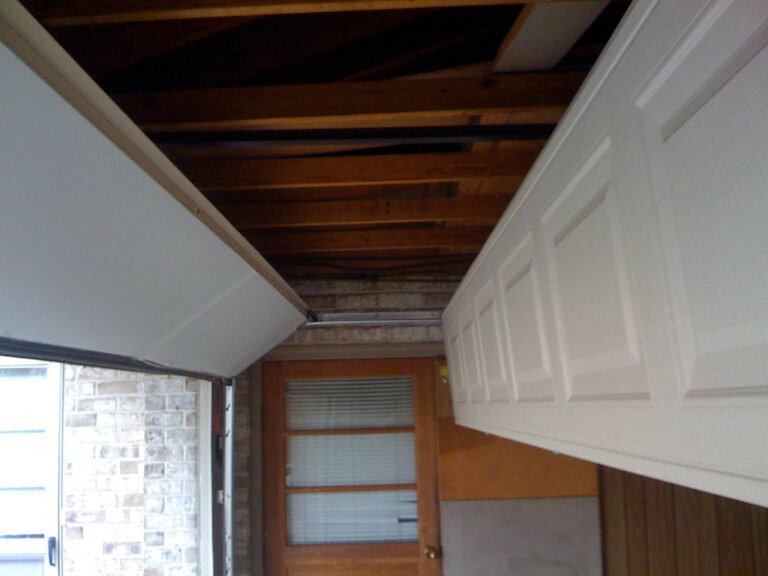
A broken spring and a broken cable feel different. A snapped torsion spring announces itself with a loud bang and leaves the door dead heavy and immovable. A snapped cable is sneakier. The classic signs: the door hangs crooked with one side lower, a cable dangles loose beside the track, or cable sits spooled in a loose pile on one drum. The door might rise a few inches then jam, or grind and shudder on the way down.
Both can fail together, since cables and springs age on the same clock. Step back and look at the full door: crooked plus loose cable means cable, straight plus dead heavy means spring.
Why Does a Snapped Cable Leave the Door Hanging Crooked?
Your door has two cables to keep the load balanced, each side carrying roughly half the weight. Snap one cable and that side loses lift while the other keeps pulling. Gravity drags the dead corner down as its drum goes slack.
The tilt is not cosmetic. A crooked door binds in its tracks, rollers pop out of alignment, and the opener strains against uneven resistance, which is why running it afterward bends tracks, chews rollers, and stresses panels.
A crooked door can jump its track — see our garage door off track repair in Rochester, NY.
Can I Still Open or Close the Door With a Broken Cable?
Please do not try. I know the temptation is real. But a door with a snapped cable is unpredictable. It can slam down with its full 200 to 400 pounds, and anything underneath will lose that argument.
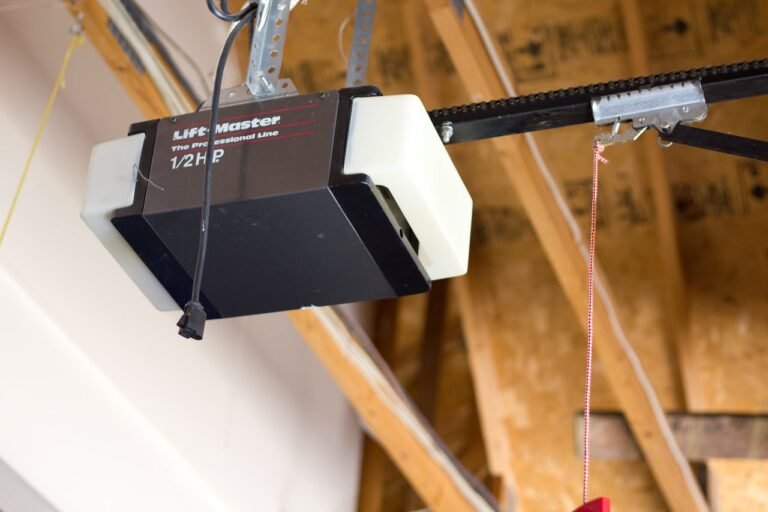
Running the opener makes it worse. The motor strains against the imbalance and can strip its gears or fold the top panel. Yanking the emergency release on a tilted door can let the whole thing crash. A door stuck open is a security problem. A door stuck shut stays shut. Either way, call our garage door repair team in Rochester, NY and let a pro secure it.
Why Is Swapping a Cable Yourself So Dangerous?
The cable is never just a cable. It sits under full spring tension, so replacing it means releasing the torsion springs with winding bars, unthreading the old cable, seating the new one on the drum, and re-tensioning everything evenly. Every step happens next to stored energy that can release violently. A winding bar that slips, a set screw that lets go, a cone that cracks. Any of these can throw steel hard enough to break bones.
The Door and Access Systems Manufacturers Association states it plainly: due to the dangers of high spring tension, these cables should be replaced only by a trained technician. YouTube makes it look calm and orderly. Your garage, with a tired spring and a tilted 300-pound door, is not that video.
What Is the One Part of This Job You Should Never Touch?
The spring hardware: the winding cones, the set screws that lock the springs to the shaft, the cable drums while under tension, and the bottom brackets. Those bolts hold back spring force, and manufacturers like Clopay warn directly against loosening fasteners on springs, cables, or bottom fixtures.
On extension spring doors, never work around the springs unless safety containment cables run through them. One rule covers it all: if a part connects to spring tension, your hands stay off it. Looking is fine. Touching is not.
What Does a Safe Professional Cable Replacement Look Like?
First, the technician disconnects the opener and clamps the door so it cannot move. Then spring tension is released in controlled quarter-turns using proper winding bars, slowly and deliberately. The old cables come off and a new matched pair goes on, because the surviving cable has lived the same hard life and will fail soon after.
With everything apart, the drums, bearings, rollers, and bottom brackets get inspected. Then the springs are re-tensioned evenly, the door balance-tested, the opener reconnected, and the safety sensors verified. This mirrors the same five-step process we follow on every visit. Nothing improvised, nothing skipped.
How Much Does a Cable Replacement Usually Cost?
Straight answer with the usual caveat: prices vary by market and door. Most homeowners report paying roughly $150 to $300 for a cable pair replacement including labor. Heavier doors, damaged drums, or worn springs push the ticket higher.
The cables themselves are cheap. You are paying for safe handling of spring tension and the expertise to rebalance the door. That is also why both cables get replaced together. The extra part costs little and the labor barely changes. Be wary of anyone who quotes a single cable, and be glad when a company gives you one clear price before starting. That approach, pricing discussed first, is a big part of why homeowners choose us.
Should the Springs Get Replaced at the Same Time?
Sometimes, not always. Cables and springs are a team on the same clock, so a frayed cable often hints the springs are near the end of their cycle life. If the springs show wear, like gaps in the coil, rust, or a door that no longer balances, replacing everything in one visit saves a second service call since the labor overlaps.
Frayed cables often mean tired springs too — see our garage door spring repair in Rochester, NY.
But healthy springs do not need replacing just because a cable failed. A straight technician will show you the springs and explain what they see. If someone insists the springs are shot without showing you why, get a second opinion.
How Do You Keep Cables From Snapping Again?
Cables rarely fail without warning. Once a month, with the door closed, check both cables where they meet the drums and bottom brackets for frayed strands, rust, or kinks. Every manufacturer checklist lists worn cables as a call-a-professional item.
Keep tracks clean, wipe grime off the cables, and use a light silicone lubricant on moving metal. Skip WD-40, which strips lubrication and attracts dirt. Twice a year, run the balance test: disconnect the opener and lift the door halfway. If it does not stay put, the system is out of balance. Schedule a tune-up before small wear becomes a 7 a.m. emergency.
A snapped cable is a “call, don’t touch” problem: straightforward for a trained technician, dangerous for everyone else. If your door is hanging crooked right now, leave it alone and get help. With garage door repair across Rochester, help is one call away. One call, one price agreed first, and your door lifts evenly again.
Need this fixed? See our garage door cable repair in Rochester, NY and call to confirm availability.
Snapped Cable Questions, Answered
Both, always. The two cables have shared every open and close cycle since installation, so the survivor is just as fatigued as the one that snapped. Replacing only one leaves you with mismatched wear and a second failure waiting weeks or months away. The cable itself is the cheapest part of the job. Since the technician is already releasing spring tension and rebalancing the door, adding the second cable adds very little cost and removes the risk of a repeat visit.
Roughly as long as the springs they work with, often 7 to 12 years on a typical residential door, depending on use, climate, and maintenance. Doors that cycle many times a day wear faster. Rust is the great accelerator, especially where road salt and humidity are in play. Monthly visual checks catch fraying early, which is the whole point of looking. If your springs are near the end of their rated cycle life, assume the cables are too and have both inspected together.
You can plan, but do not stall. A frayed cable is already failing. Broken strands force the remaining strands to carry extra load, which speeds up the final snap. Keep using the door normally and it will let go at the worst moment, possibly mid-cycle with the car inside. Book the replacement now, on your schedule, instead of as an emergency later. And do not try to “help” it along by trimming frayed strands. That only weakens it further and moves the snap closer.
Yes, and that is part of the danger. The opener does not know a cable failed. It will keep pulling against a crooked, binding door, which can strip its internal gears, burn out the motor, or bend the top panel where the opener arm attaches. If you suspect a cable failure, stop using the opener immediately and warn everyone in the house. Unplug it if you want to be certain nobody hits the button. Then leave the door alone until a technician fixes it.
Treat it as urgent, yes. A door stuck open is a security problem, and a door stuck shut can trap your car inside. More importantly, a tilted door under tension is unstable, so it should not be operated or messed with. Most cable jobs are completed in a single visit, so calling sooner means less time living around a broken door. If the door is hanging open overnight, do not leave the house unsecured while you wait for the technician.
Cold does not usually snap a healthy cable, but it finishes off a weak one. Freezing temperatures stiffen lubricant, make steel slightly more brittle, and let moisture work into tiny frays where it freezes and expands. Doors also feel heavier in winter as grease thickens, which loads the cables harder. If your cables are aging, winter is when they tend to let go without warning. A fall inspection before the cold sets in is cheap insurance against a January emergency.
Not always, but they must be inspected. When a cable snaps, it can unwind violently and chew grooves into the drum, or the drum can crack from the sudden shock. A damaged drum will shred a new cable in short order. A good technician checks both drums for scoring, cracks, and wobble while the system is apart. If they are smooth and true, they stay and the job moves on. If not, replacing them with the cables is the only sensible call.
Watch the final test. The door should travel smoothly with no tilt, no grinding, and no jerking. It should stay put when lifted halfway by hand with the opener disconnected. That is the balance test, and it proves the springs and cables share the load evenly. The cables should wind neatly onto the drums with no slack or overlap. And the safety sensors should stop and reverse the door on command. If any of that looks off, say so before the technician leaves.
Door Hanging Crooked? Don’t Touch It, Call Instead
A snapped cable is a same-visit fix for a trained technician. One call, one price agreed first, and the door lifts evenly again.
Call (866) 727-0060