How to Make Your Garage Door Quieter Without Replacing the Opener
Before you price a new opener, read this. Most loud doors are not dying openers at all. They are worn rollers, dry hinges, and loose bolts, and the fixes cost less than a family pizza night.
A homeowner two streets from a job I was on last spring was ready to spend real money. Her door rattled the whole house awake at 5:45 every morning, and a big-box store had quoted her a new opener, installed, at just over $700. The opener was six years old. Nothing about that math felt right to her, so she asked me to listen to one cycle before she signed anything.
I stood in the driveway and heard it right away. The opener sounded fine. The noise was coming from the door itself, a harsh metal chatter as it rolled around the curve of the track. Her steel rollers had worn flat spots and dead bearings. Every rotation was a tiny hammer strike. We swapped in nylon rollers with sealed bearings, lubed the hinges, and snugged a row of loose track bolts. Total parts cost under $60. The next morning her door ran quieter than she could ever remember it running.
The short version
- The loudest part of most doors is the rollers, not the opener.
- Nylon rollers with sealed bearings are the best quiet-per-dollar upgrade. A full set typically costs $30 to $80.
- Lubrication is free quiet: silicone spray on hinges, roller stems, and spring coils.
- Loose hardware rattles. Ten minutes with a socket wrench fixes most of it.
- Rubber isolation pads calm an opener that shakes the ceiling.
- A stripped drive gear is the rare case where the opener really is guilty.
Why Is My Door So Loud in the First Place?
A door is a chain of moving metal, and noise is just friction with a voice. Steel rollers grind inside steel tracks. Hinge pins flex dry at every section joint. Spring coils bind and release. Bolts loosened by a thousand cycles let brackets dance in place. The opener gets blamed for all of it because it is the part with the motor, but in most garages it is the quietest machine in the system.
The trick is ranking the suspects before you spend anything. Rollers first, because they touch the track along the whole trip. Lubrication second, because it costs almost nothing. Hardware third, because rattles multiply fast. Opener vibration last. If you have not matched your sound to a part yet, start by decoding what each garage door noise actually means, then come back here with your culprit named.
What Is the Single Best Upgrade for the Money?
Nylon rollers with sealed bearings, and it is not close. Your door probably rides on steel rollers with exposed bearings that collect grit and wear flat spots over the years. Each flat spot strikes the track once per rotation, which is why old doors chatter instead of hum. Nylon wheels roll softer on the steel track, and sealed bearings keep the dirt out, so they stay smooth for years instead of months.
A full set of ten typically costs $30 to $80, and most homeowners report a pro swap landing between $150 and $250 with labor. Confident DIYers replace the top and middle rollers one at a time with the door closed. One hard rule: never remove the bottom rollers yourself. They bolt to the bottom brackets, which sit under full cable tension. Top rollers are a Saturday project. Bottom rollers are a technician visit.
Bottom rollers under cable tension need a technician — see our garage door cable repair in Rochester, NY.
Can Lubrication Alone Quiet a Door?
Sometimes, yes, and it costs about ten dollars to find out. Dry hinge pins and roller stems cause most squeaking, and a silicone-based spray or white lithium grease quiets them on the first pass. Hit every hinge pivot, the roller stems where they meet the brackets, and a light coat along the spring coils. Then run the door three or four times to work it in.
Two warnings. Keep lubricant out of the tracks, because rollers need to roll, not slide on grease that collects grit. And skip the famous blue-and-yellow can. It is a solvent that strips real grease and leaves parts drier than it found them, which is the whole story behind why WD-40 makes garage doors louder over time. Clopay’s own lubrication guide names the same points and the same warning.
Does Tightening Loose Hardware Really Help?
More than people expect. Every cycle vibrates the door, and over the years the nuts on the track brackets, the hinge screws, and the opener mounting straps back off a quarter turn at a time. A loose bracket does not just sit there. It rattles against the track with every movement, and five loose brackets sound like a drum kit.
Take a socket wrench and snug everything you can reach: track bracket bolts, hinge screws, opener straps. Snug is the target word. Cranking bolts hard enough to strip threads or pull a track out of alignment trades your rattle for a grind, which is a worse problem. Ten patient minutes here removes a whole layer of noise that no spray can touch.
How Do I Stop the Opener From Shaking the Whole House?
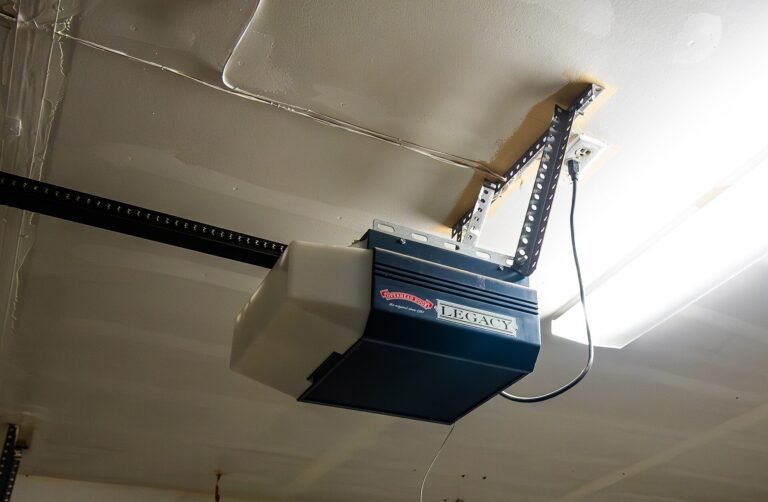
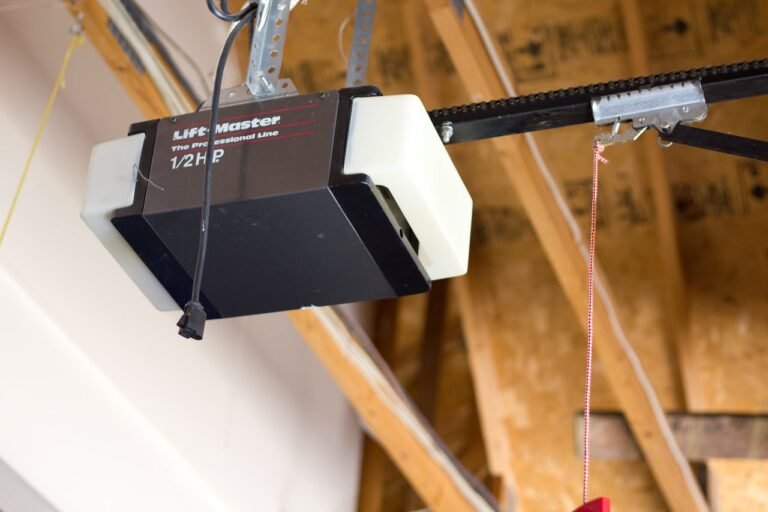
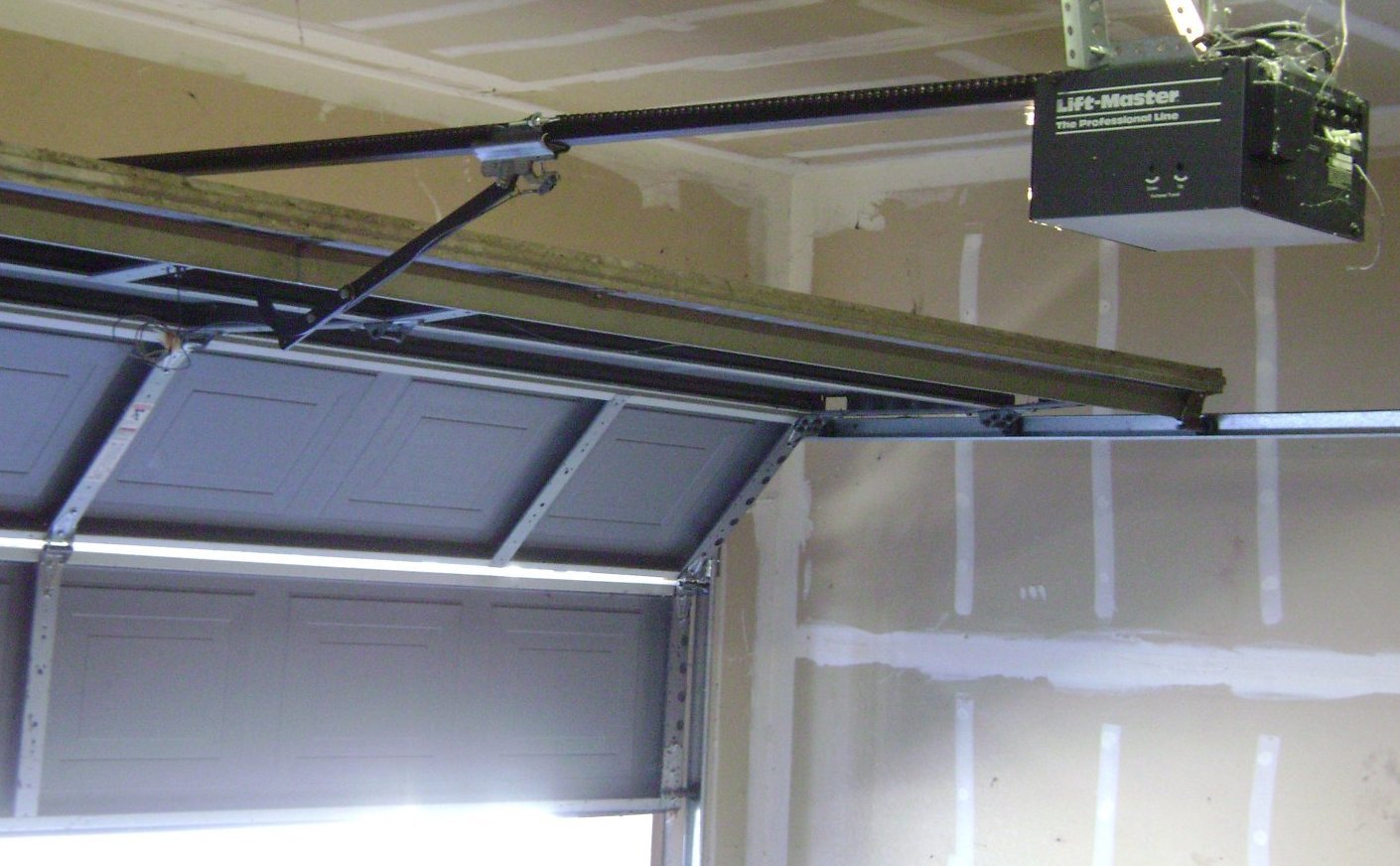
When the bedroom sits over the garage, the problem is rarely volume. It is vibration traveling through the ceiling joists. The opener hangs from metal angle iron bolted straight to the framing, and every tremor the motor makes gets a wooden amplifier.
The budget fix is isolation. Rubber pads or a purpose-made opener isolation kit go between the opener and its mounting straps, and they absorb the shake before it reaches the joists. Most kits cost $15 to $40. While you are up there, check that the mounting hardware is tight, because a loose mount rattles on its own. Also check the door balance. An opener straining against a heavy, unbalanced door vibrates harder, and no pad fixes a door that needs its springs looked at.
A door needing its springs looked at needs a pro — see our garage door spring repair in Rochester, NY.
When Is the Opener Actually the Problem?
Run this test first. Pull the red emergency release cord and move the door by hand. If it rolls smooth and quiet by hand but growls under power, the opener is guilty. The classic culprit is a stripped nylon drive gear inside the motor head. Look for white plastic shavings in the opener housing or on top of the motor. That gear is a sacrificial part, and when it goes, the motor hums while nothing useful happens.
Quiet by hand but growling under power means opener trouble — see our garage door opener repair in Rochester, NY.
Age is the other tell. Openers typically live 10 to 15 years, and a loud unit near the end of that range with a worn rail is a fair replacement candidate. But get the hand test done before anyone quotes you a motor. A proper visit runs the same five-step process every time, starting with exactly that test. When it points at the opener, our garage door repair team in Rochester, NY can confirm it in one visit and quote the fix before any work starts.
Quiet Door Questions, Answered
The noise questions homeowners ask before replacing an opener they do not need.
A full set of ten nylon rollers with sealed bearings typically costs $30 to $80 at a hardware store or online, depending on stem length and bearing quality. Most homeowners report paying $150 to $250 total when a technician supplies and fits the full set, including the bottom rollers that sit under cable tension. Compared with a new opener at several hundred dollars installed, rollers are the cheapest meaningful quiet upgrade a door can get, and they usually make the biggest difference per dollar spent.
You can replace the top and middle rollers safely with the door closed, swapping one at a time so the door stays supported in the tracks. Bend the track edge slightly or remove the hinge, slide the old roller out, and fit the new one. Never remove the bottom rollers yourself. They attach to the bottom brackets, which carry full lift cable tension, and loosening them can release that tension violently. Leave the bottom pair to a technician with the right clamps and winding bars.
Cold thickens old lubricant and contracts metal overnight, so hinges and rollers that are slightly dry in October complain loudly in January. Spring coils also bind against each other more when cold, adding a popping sound as the door travels. A fresh lubrication pass in the fall with silicone spray or white lithium grease fixes most seasonal noise. If the door stays loud all day after warming up, the parts are worn rather than cold, and lubrication will only mask the problem briefly.
Only the share of noise the opener makes. A belt drive is genuinely quieter than a chain drive, with no chain slap against the rail. But if your rollers are worn, your hinges are dry, or your hardware is loose, a new belt opener will faithfully and quietly power a loud door. Quiet the door hardware first with rollers, lubrication, and a wrench. Then judge the opener on its own. Many homeowners find the old chain drive perfectly acceptable once the door itself stops shouting.
Use a silicone-based spray for hinge pivots, roller stems, and general moving parts, and white lithium grease for spring coils and other heavy metal-on-metal contact. Apply a light film, wipe the excess, and run the door a few times to spread it. Never lubricate the tracks themselves, because rollers need to roll in a clean, dry channel. Avoid the original WD-40 multi-use product. It is a solvent and water displacer that strips existing grease and leaves a dust-trapping film behind.
The signs are specific. The motor hums or runs, but the door barely moves or does not move at all. You may find white or gray plastic shavings inside the opener housing or sprinkled on top of the motor unit. The chain or belt may hang slack while the motor spins freely. Most chain-drive openers use a nylon drive gear that wears out after years of service, faster on unbalanced doors. A technician can confirm it quickly and tell you whether a gear kit or a new opener makes more sense.
Often, yes. Insulated doors have stiffer, sandwich-built sections that flex and rattle less than thin single-layer steel panels, and the added weight helps the door track more smoothly when the springs are matched to it. Insulation is not a noise cure on its own, though. A heavy insulated door on worn rollers is still loud, and fitting one to old springs sized for a lighter door creates balance problems. Treat insulation as a bonus that comes with a new door, not a reason to buy one for silence alone.
Quality nylon rollers with sealed ball bearings are commonly rated for 10,000 or more door cycles, which works out to roughly 7 to 10 years on a door used three or four times a day. They outlast basic steel rollers because the sealed bearings keep grit out and the nylon wheel does not develop the harsh flat spots that make steel rollers chatter. You will know they are aging when a squeak or wobble returns despite fresh lubricant. At that point a fresh set restores the quiet for another long stretch.
The Bottom Line
Work the list in order: rollers, lubrication, hardware, isolation. Most loud doors go quiet for under $100 in parts, and the opener turns out to be innocent. That is the difference between diagnosing a door and just selling parts at it, and it is why homeowners choose a pro who explains first when they do call one.
If you work through every fix on this page and the noise survives, the problem is past a Saturday repair. With garage door repair across Rochester, a technician can hear your door in person, name the part that is failing, and give you one price before touching a bolt.
Tried the Cheap Fixes and It Is Still Loud?
Some noises are a part asking for help before it fails. Get it heard by a pro now, while the problem is still quiet and cheap.
Call (866) 727-0060