
Why Is My Garage Door So Loud? A Noise-by-Noise Guide
Six sounds, six causes, and an honest verdict on which ones you can fix yourself.
I will never forget the 6 a.m. door. A few streets over from a job I was doing, one steel door screamed its way up the tracks every single morning, loud enough to rattle windows. The owner told me he had gotten used to it. His neighbors had not. When I finally got permission to look at it, the fix took twenty minutes and a five-dollar can of silicone spray. He had lived with that racket for three years because nobody ever told him a loud door is a talking door.
Here is the thing most homeowners never learn. Your garage door is the largest moving machine in your house, and it complains out loud before it breaks. Every grind, squeak, bang, and pop is a symptom with a name. Learn the language and you can tell a five-minute lube job from a spring that is about to let go. This guide is my noise-by-noise decoder, built from years of standing in garages listening to doors tell on themselves.
Match Your Noise to the Cause in 30 Seconds
| Noise | Most likely culprit | Your move |
|---|---|---|
| Grinding | Worn steel rollers or stripped opener drive gear | Inspect rollers yourself, pro for the gear |
| Squeaking | Dry hinges and roller stems | DIY with silicone spray |
| Banging on close | Weak spring or close force set too high | Test the balance, pro for springs |
| Sudden pop | Binding spring coils or snapped spring | Lube the spring, pro if it will not lift |
| Rattling | Loose bolts or slack opener chain | Tighten and adjust yourself |
| Humming, no movement | Motor straining, likely broken spring | Stop and call a pro |
What Does Grinding Usually Mean?
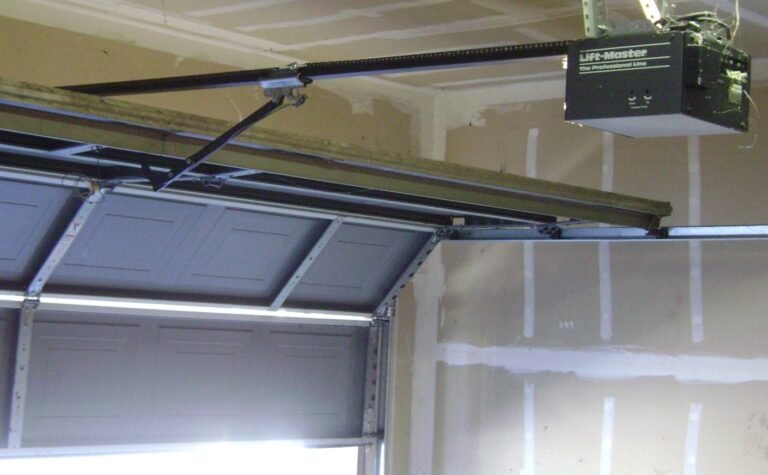
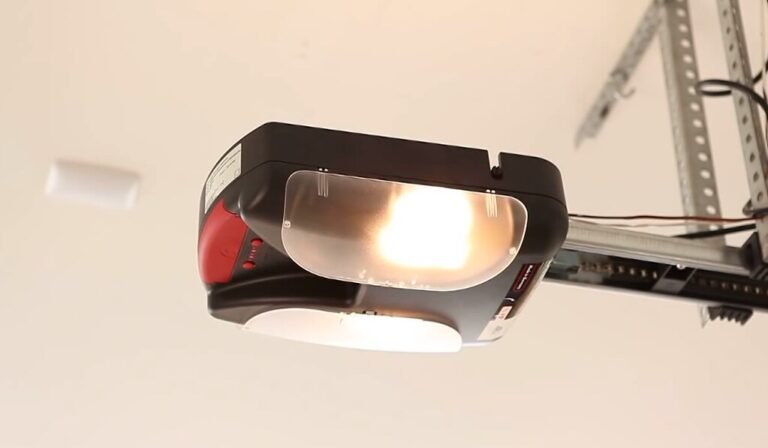
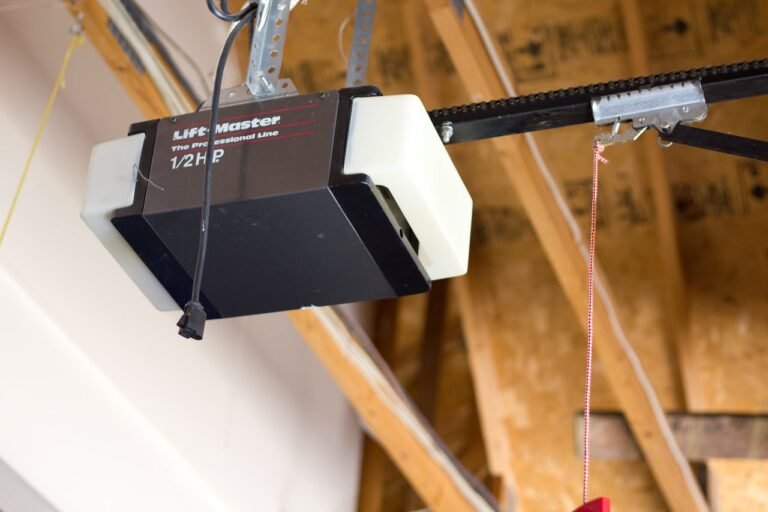
Grinding is metal crying for help. It sounds like the door is chewing gravel, and it comes from one of two places. The first is the rollers. Old steel rollers develop flat spots and dead bearings, so they drag instead of roll inside the track. The second is inside the opener. Most chain-drive units from LiftMaster and Chamberlain use a small plastic drive gear, and after ten to fifteen years that gear strips. Then the grinding comes from the motor head, and the door may stutter or stop halfway.
Tell them apart with the hand test. Disconnect the opener with the emergency release cord and run the door manually. Still grinds? It is the rollers or track. Smooth by hand but grinding under power? Suspect the opener gear.
Inspect the rollers. If they are steel and wobbling, swap the upper ones for nylon rollers with sealed bearings.
A stripped drive gear means opening the motor head. Leave bottom-bracket rollers alone too, since they sit under cable tension.
Why Does My Door Squeak Every Time It Moves?
Squeaking is the friendliest noise on this list. It is almost always dry hinges and roller stems rubbing with every cycle. Each hinge has pivot points that flex as the door bends around the track curve, and without lubricant they sing.
The fix takes fifteen minutes. Grab a silicone-based spray or white lithium grease and hit every hinge pivot, roller bearing, and spring coil, then work the door up and down to spread it. What I wish someone had told me years ago: do not spray the tracks. They should stay clean and dry, because lubricant in the track collects dust and turns into grinding paste. And skip the WD-40. It is a solvent, not a lubricant, and it leaves metal drier than it found it.
This one is all yours. A proper lube job twice a year stops most squeaks before they start.
If squeaking survives a real lube job, the hinges themselves are worn out, which is a quick swap for a technician.
Why Does It Slam Down Like a Dropped Anvil?
A healthy door closes firmly. It does not crash. When yours slams, the weight balance is off or the force pushing it down is wrong. The usual suspect is the spring system. Torsion or extension springs counterbalance the door so the opener only guides it. When a spring weakens or breaks, gravity takes over and the door free-falls the last stretch. The other suspect is the opener’s close-force setting cranked too high.
This one deserves respect. A slamming door can crack panels, strip opener gears, and crush anything underneath. If it started suddenly, check the springs before running the door again. Pull the release cord and lift by hand. Heavy, or will not stay halfway up? The spring is gone.
Turning down the close-force dial is a homeowner job. Small adjustments, retest after each one.
Anything involving springs or cables. They store enough energy to cause serious injury.
What Causes That Sudden Loud Pop?
There are two pops, and they mean very different things. The common one is rhythmic, pop-pop-pop as the door travels. That is usually torsion spring coils binding and releasing, or nails in the wood header popping as the framing flexes. Annoying, not an emergency. The other is a single gunshot crack followed by a door that will not open. That is a spring snapping.
For binding coils, a light coat of silicone spray along the spring often silences it on the spot. For the gunshot pop, stop running the opener or you will burn out the motor lifting dead weight. The industry association DASMA is blunt about this: spring systems should be repaired only by trained professionals.
Lubricate a binding spring and see if the rhythmic popping stops.
A snapped spring, full stop. Do not run the opener until it is replaced.
Why Does Everything Rattle When the Door Moves?
Rattling is the sound of a thousand tiny loosenings. Every cycle vibrates the hardware, and over the years the nuts and bolts on tracks, hinges, and opener mounts back off. A loose bolt lets its bracket dance. Chain-drive openers add their own rattle when the aging chain starts slapping the rail.
The fix is satisfying. Take a socket wrench and snug every bolt you can reach: track brackets, hinge screws, opener mounting straps. But do not go full gorilla. Overtightening strips threads and can pull a track out of alignment, trading your rattle for a grind. For the chain, adjust tension per your opener manual.
Tightening hardware is safe, effective, and weirdly fun.
If the track is bent or the door runs crooked after your tune-up, the geometry needs a trained eye.
Why Is the Opener Humming but the Door Barely Moves?
That hum is a motor straining against a load it was never designed to carry. Openers guide a balanced door, not deadlift one. When a spring breaks, the door can weigh two hundred pounds, and the motor hums, strains, and eventually burns out. The other possibility is a stripped drive gear: the motor spins, the teeth are gone, nothing moves.
Stop pressing the button. Every extra cycle risks killing the motor, turning a spring replacement into a spring replacement plus a new opener. Pull the emergency release and try the door by hand. Heavy means springs. Smooth by hand but dead under power means the opener. The DASMA opener safety guidance is worth reading before you touch anything.
Dead under power means the opener — see our garage door opener repair in Rochester, NY.
The manual hand test. That is the diagnosis, and it costs nothing.
A humming opener means the system failed upstream. Almost always a technician visit.
Is a Loud Door Dangerous, or Just Annoying?
Honest answer: usually just annoying. Squeaks and rattles are a door asking for maintenance. But banging, grinding, and sudden pops are the sounds of parts failing under tension, and those deserve your full attention.
A torsion spring stores enormous energy, and cables hold it in check. When either fails, a heavy door can drop without warning. My rule: if the noise appeared suddenly, treat it as a warning, not background music. Disconnect the opener, test by hand, and if anything feels heavy, crooked, or wrong, stop. This is the kind of job where calling a technician beats risking it.
What Can I Safely Quiet Down Myself This Weekend?
Plenty. Here is the safe list, the one I hand to friends. First, lubricate. Silicone spray on every hinge pivot, roller bearing, and spring coil. Fifteen minutes, twice a year, and half the noises on this list never start. Second, tighten. Socket wrench on every track bolt and hinge screw, snug but not stripped. Third, wipe the safety sensor lenses, since dirty photo eyes cause their own symphony of reversing and beeping. Fourth, run the balance test. Disconnect the opener and lift the door halfway. It should stay put.
Fifth, upgrade the top rollers. If yours are steel and noisy, nylon rollers with sealed bearings are the single biggest quiet upgrade a door can get. Leave the bottom rollers alone. They sit under cable tension and they bite. What stays off your list entirely: springs, cables, bottom brackets, and winding bars. If the job needs winding bars, it needs a technician. That is the whole rule.
When Should I Stop Troubleshooting and Call Someone?
When the problem involves stored energy, a crooked door, or a dead opener. Concretely: a spring you suspect is broken, any frayed or loose cable, a door that has jumped its track, an opener that hums without moving, or a door that will not stay open by hand. There is no prize for diagnosing it perfectly yourself. The prize is a quiet door and all your fingers. A standard visit is straightforward, and here is exactly what happens when a technician shows up, from inspection to a price discussed first to the final safety test. If you are in our area, our garage door repair team in Rochester, NY handles exactly these calls every day.
A frayed or loose cable needs a pro — see our garage door cable repair in Rochester, NY.
A door that jumped its track needs a pro — see our garage door off track repair in Rochester, NY.
Your Door Should Not Sound Like That
A loud garage door is a talking garage door. Grinding, squeaking, banging, popping, rattling, humming. Each one points at a part, and now you know which is which. Handle the easy ones this weekend with a can of silicone spray and a socket wrench. Hand the dangerous ones to someone with the right tools and training.
If your door is making any of the serious noises on this list, do not wait for it to get worse. Garage door repair across Rochester can fix the problem before it becomes an emergency. One call, a price agreed first, and a quiet door.
Noisy Door Questions, Answered
Cold thickens lubricant and contracts metal overnight. Hinges and rollers that are only slightly dry get loud when cold, then quiet down as friction warms them up. If the morning noise fades after one full cycle, a fresh lube job usually fixes it. Spray silicone lubricant on the hinges, roller bearings, and spring coils in the evening, run the door three or four times, and listen the next morning. If it stays loud all day, the parts are worn out, not just cold, and lubrication will only mask the problem for a while.
No, and this is the most common mistake I see. WD-40 is a water displacer and solvent, not a long-term lubricant. It dissolves the grease that is already on your hinges and rollers, then evaporates and leaves the metal drier than it found it. Worse, the residue attracts dust, which turns into an abrasive paste inside your tracks and roller bearings. Use a silicone-based spray or white lithium grease instead. Apply it to hinge pivots, roller bearings, and spring coils, and keep the tracks themselves clean and dry.
Twice a year, spring and fall, and the whole job takes about fifteen minutes. Hit the hinge pivots, the roller bearings, and the spring coils with a silicone-based spray. Wipe the tracks clean with a rag instead of lubricating them, since lube in the track collects grit. While you are at it, snug the track bolts and wipe the safety sensor lenses. If your winters are harsh, do the fall lubrication a little early, before the first real freeze, because cold makes every dry part louder and every weak part weaker.
Yes. Swapping old steel rollers for nylon rollers with sealed ball bearings is the single biggest noise upgrade most doors can get. Steel rollers rattle and grind inside the track as their bearings wear out. Nylon rollers glide quietly and absorb vibration instead of amplifying it. Most homeowners say the door sounds like a completely different machine afterward. You can replace the upper rollers yourself, but leave the bottom rollers to a technician, since they sit under cable tension and removing one the wrong way can cause serious injury.
Yes, noticeably. Belt-drive openers use a reinforced rubber belt instead of a metal chain, so there is no chain slap or metal-on-metal rattle from the drive itself. That said, modern chain drives are much quieter than the twenty-year-old units people remember, and brands like LiftMaster, Chamberlain, and Genie have all refined their chain models. One warning: if your door hardware is worn, a new belt opener will not fix the noise. Quiet the rollers, hinges, and tracks first, then judge whether the opener itself is the problem.
Often, yes. Metal contracts in the cold, so torsion spring coils bind against each other and release with little pops as the door travels. Nails in the wood header can also pop as the framing shifts under load. A light coat of silicone spray along the spring coils usually quiets coil binding right away. What is not normal: one huge bang followed by a door that will not open or feels extremely heavy by hand. That is a broken spring, not the weather, and running the opener will only burn out the motor.
No. Snug is the target, and overtightening causes real damage. Cranking bolts too hard strips the threads, cracks roller brackets, and can pull the tracks out of alignment, which trades your rattle for a much worse grinding problem. Use a socket wrench, tighten each bolt until it is firmly seated, then stop. If you adjusted anything on the tracks, check them with a level afterward. Vibration loosens hardware gradually over thousands of cycles, so make this a once-a-year check rather than a one-time gorilla session.
Closing is when gravity works against the spring system. If a spring is weak or broken, it cannot counterbalance the door on the way down, so the door free-falls the last stretch and slams into the floor. Opening gets help from the opener motor pulling upward, which masks the problem. It can also be the opener’s close-force setting turned up too high, driving the door down with unnecessary violence. Run the balance test: disconnect the opener and lift the door halfway by hand. If it drops on its own, the spring needs professional attention.
Ready for a Quieter Door?
One call gets you an inspection, a price agreed first, the fix, and a full safety test. No more 6 a.m. wake-up calls for the whole street.
Call (866) 727-0060