Repair or Replace? How to Tell When Your Garage Door Is Done
A $1,500 repair quote in one hand, a $3,500 new door in the other. Here is the math technicians actually use, plus the honest cases where each choice wins.
A homeowner called me last year holding two pieces of paper. His door was fourteen years old. A spring had snapped, the opener was grinding, and one panel had a crack spreading from the hinge line. Paper one said $1,450 to fix everything. Paper two said $3,400 for a new insulated door, installed. Both numbers felt like a trap, and he wanted a third opinion from someone who was not selling either one.
We walked his garage and ran five checks: the repair total against the replacement price, the door’s age, the panels, the failure count, and the frame and tracks. His panels were straight, the crack was in one replaceable section, and the failures were mechanical, not structural. He repaired it, and that door is still running quietly today. His neighbor replaced hers the same month, and that was the right call too, because her door failed four of the five checks. The difference was never luck. It was the checks.
The short version
- The 50% rule: if the repair costs more than half of a new installed door, and the door is over 12 to 15 years old, replacement usually wins.
- Mechanical failures (springs, cables, openers) are repair territory. Structural failures (rotted or cracked sections, bent tracks) lean replacement.
- One failure is a repair. The same door failing three ways at once is a message.
- Most homeowners report paying $1,200 to $3,500 for a standard new door, installed.
- New doors add real safety, insulation, and quiet, but a sound door never needs replacing over one broken part.
What Is the 50% Rule, and How Do I Use It?
Take the total repair quote and divide it by the installed price of a comparable new door. If the repair lands under 30 percent of replacement, repair almost every time. Between 30 and 50 percent, age and condition decide. Over 50 percent on an older door, and you are buying most of a new door while keeping all of the old one’s remaining problems.
The rule needs honest inputs. Most homeowners report paying $1,200 to $3,500 for a standard new door installed, with single doors at the low end and insulated doubles at the top. Get the replacement number in writing for a door like yours, not a showroom special. And make sure the repair quote is complete. A $600 spring quote that quietly excludes the grinding opener is not a $600 decision, it is a $1,400 decision wearing a disguise.
A grinding opener changes the repair math — see our garage door opener repair in Rochester, NY.
How Much Does the Door’s Age Change the Math?
A steel door can serve 15 to 30 years, so age alone never decides. Age changes what a repair buys you. On an eight-year-old door, a spring replacement restores a machine with most of its life ahead. On a twenty-year-old door, the same repair buys a working door whose rollers, cables, hinges, and opener are all near the end of their own clocks.
Use rough bands. Under 10 years, repair by default. Between 10 and 15, let condition decide. Between 15 and 20, repairs should be cheap and final, not a series. Over 20, ask hard questions before spending serious money. Parts availability matters too. Sections and hardware for older doors get discontinued, and a door you cannot get parts for is a door on borrowed time.
Is It the Panels or the Machine?
This is the check that settles most arguments. A garage door is two things: a machine (springs, cables, rollers, tracks, opener) and a structure (the sections themselves). Machines wear out part by part and are built to be serviced. Structures fail as a whole.
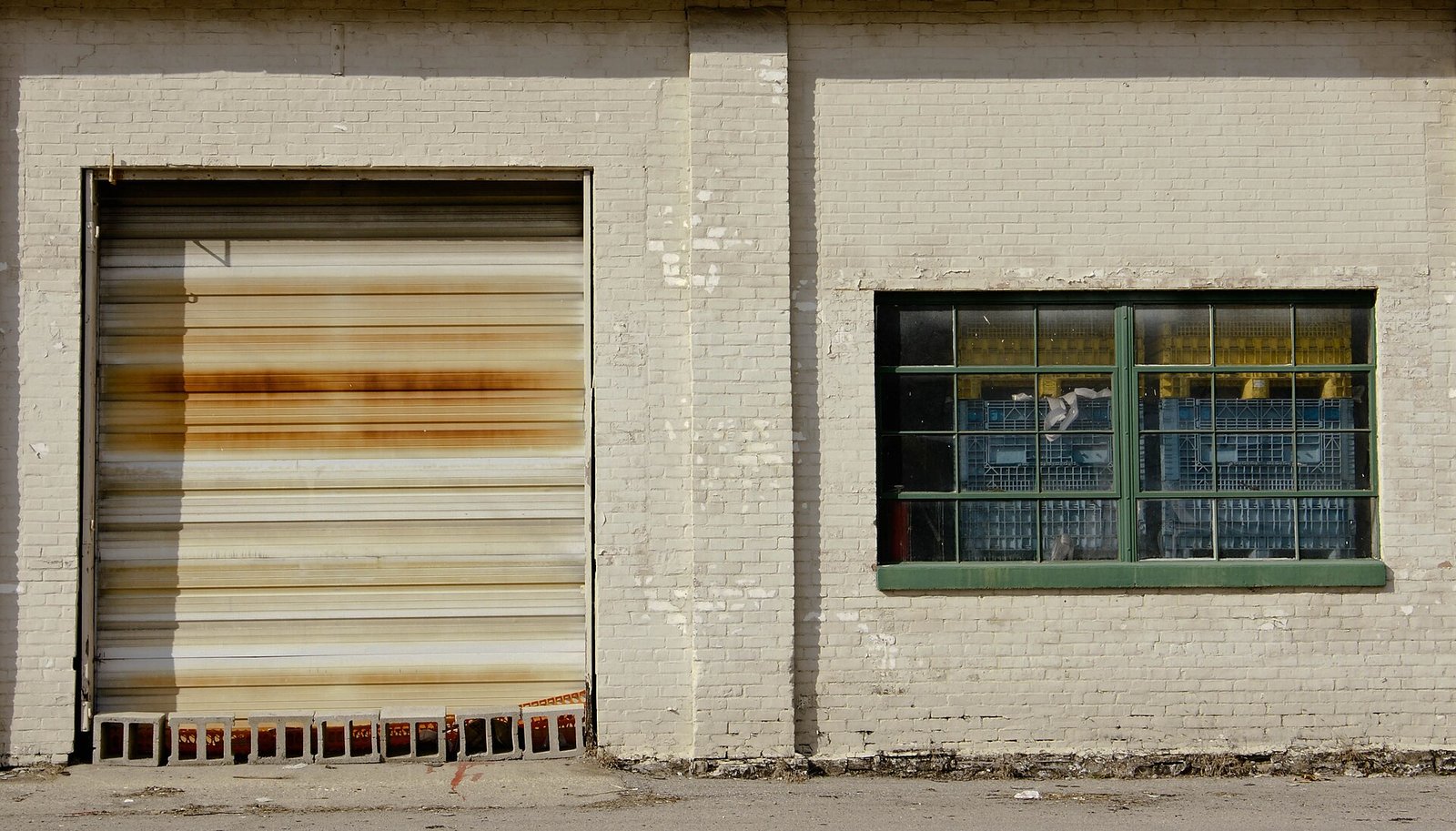
Mechanical trouble, even several parts at once, is repair territory as long as the sections are sound. Structural trouble looks different: rust eating through the bottom section, cracks spreading across a panel face, stiles pulling away from the rails, sections sagging when the door is open. Manufacturers like Clopay still sell individual replacement sections for many current models, so one damaged section on a younger door is a repair. Two or more failed sections, or rust-through, means the structure is going, and replacing the machine’s parts will not save it.
When Does Repair Honestly Win?
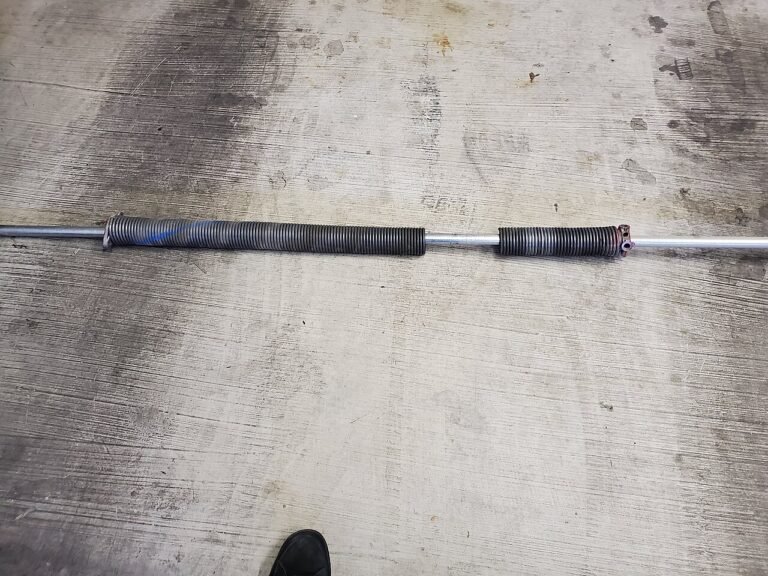
When one thing broke on a door that is otherwise sound. A snapped spring is the classic case. The door worked fine last week, the panels are straight, the opener is healthy, and a single wear part reached the end of its rating. Our breakdown of what a spring replacement should actually cost shows why that job lands at a fraction of a new door while restoring years of service.
Repair also wins when the failure is young, isolated, and explained: a cable frayed at twelve years, a gear stripped in an otherwise strong opener, a roller set worn smooth. These are the jobs our garage door repair team in Rochester, NY finishes in a single visit, with the rest of the door inspected before anyone leaves. A good technician talks you out of a new door in this situation, because the math is not close.
A cable frayed at twelve years needs a pro — see our garage door cable repair in Rochester, NY.
When Does Replacement Honestly Win?
When the failures stack up. Springs gone, cables frayed, two sections rusting, and an opener old enough to predate modern safety standards is not four repairs. It is one worn-out system sending a single message. Adding the quotes together usually lands past the 50% line anyway, and spacing them out just pays the same money in installments plus extra service calls.
Replacement also wins on gains a repair cannot give. Modern doors carry better insulation, tighter seals, and pinch-resistant section joints. An opener from before 1993 has no photo-eye sensors at all, and that gap alone justifies replacing at least the opener. If your garage sits under a bedroom or shares a wall with living space, the insulation and quiet of a modern insulated door are a daily quality upgrade, not a sales line.
What Do the Two Paths Cost Side by Side?
Put the numbers next to each other before you decide anything. These are typical ranges homeowners reported in 2025 and 2026, not quotes, and your door will argue its own case within them. Note how fast two medium repairs approach a basic new door.
A trustworthy assessment separates the paths line by line instead of waving at totals. That transparency is why homeowners choose an honest diagnosis, and our process starts with a full inspection before any number is mentioned, so the comparison is built on your actual door.
| Job | Typical range | What it restores |
|---|---|---|
| Spring replacement (pair) | $400–$650 | Full lift power, balanced door |
| Cable and roller refresh | $200–$450 | Smooth, even, quieter travel |
| New opener, installed | $400–$700 | Modern safety and drive system |
| Single panel section | $250–$800 | One damaged section, if still made |
| New single door, installed | $900–$2,000 | Whole system, sections and hardware |
| New double door, installed | $1,200–$3,500 | Whole system, insulation options |
Typical ranges as of 2026, from homeowner-reported quotes in 2025–2026. Custom wood and oversized doors run higher.
Repair or Replace Questions, Answered
The questions homeowners ask with two quotes on the kitchen table.
A steel door typically lasts 15 to 30 years depending on material, climate, and maintenance. The door’s moving parts live shorter lives on their own clocks: springs around 7 to 10 years at average use, cables 7 to 12 years, rollers about the same, and openers 10 to 15 years. That is why an older door is not automatically a replacement candidate. If the sections are straight and rust-free, replacing wear parts as they expire can keep a well-built door working well into its third decade.
Often, yes, if your door’s model is still in production and the section is sold separately. A single section typically costs $250 to $800 installed, far less than a full door. The catch is matching. A new section on a faded fifteen-year-old door will show a color difference, and discontinued models leave you hunting surplus stock. If two or more sections are damaged, or the stiles are cracking around the hinge mounts, the structure itself is failing and full replacement becomes the smarter spend.
No. The opener and the door are separate machines with separate lifespans, and a dead opener says nothing about the door’s health. Most homeowners report paying $400 to $700 for a modern opener installed, which buys you current safety features, battery backup options, and a quieter drive. Keep the door, replace the opener, and have the technician check the door balance during the same visit. The one exception is an opener so old it lacks photo-eye sensors entirely, paired with a door in rough shape. Then the combined picture may argue for doing both.
Usually not. A new door quote typically covers the sections, tracks, springs, and hardware, installed and balanced. The opener is a separate line item unless the package explicitly bundles one. This matters for the 50% rule, because comparing a repair quote against a door-only price understates the true replacement cost if your opener also needs to go. Ask every bidder one direct question: does this number include the opener, the haul-away of the old door, and new seals? Get the answer in writing before you compare anything.
For an attached garage, usually yes. Insulated doors carry polystyrene or polyurethane cores with meaningful R-values, and they keep the garage closer to house temperature, which protects pipes, paint, and anything stored out there. Rooms above the garage feel the difference most. Insulated sections are also stiffer and quieter than single-layer steel. For a detached garage used only for parking, the math is weaker and a basic door may serve fine. Match the insulation to the building, not to the salesperson’s enthusiasm.
Then the repair only makes sense if it is cheap and keeps the door safe in the meantime. Springs, cables, and rollers belong to the old door and do not transfer to a new one, so money spent on them is gone when the door goes. That argues for the minimum safe repair when replacement is already on your horizon: fix what makes the door dangerous or unusable, skip the refresh items. If the needed repair is expensive, pull the replacement forward instead of paying for the same years of service twice.
Garage door replacement consistently ranks among the highest-return exterior projects in national remodeling surveys, often recovering a large share of its cost at resale, because the door dominates the front of many houses. Treat the exact percentages as national averages, not a promise for your street. The honest version: a clean, modern, well-sealed door improves curb appeal and removes an inspection objection, while a dented, rusting door does the opposite. If you are selling within a year or two, that flips the 50% math toward replacement more often than people expect.
Ask for three things. First, an itemized written quote that separates parts and labor, so you can compare it against typical ranges. Second, a walk to the door where the technician physically shows you each failed part, because real wear is visible: frayed strands, coil gaps, cracked stiles. Third, an answer to one question: what happens if I do nothing for six months? A company confident in its diagnosis explains the risk calmly. Pressure tactics, expiring prices, and problems nobody will show you are your cue to call someone else.
The Bottom Line
Run the five checks in order: the 50% math, the age band, panels versus machine, the failure count, and the gains only a new door offers. Most doors give you a clear answer by the third check. Repair the sound door with one honest failure. Replace the door whose structure and systems are finishing together.
If you want the checks run on your actual door instead of a hypothetical one, garage door repair across Rochester puts a technician in your driveway, with one price agreed first for the repair path and a straight answer on the replacement path.
Stuck Between Two Quotes?
Bring both numbers. We will run the five checks on your actual door and tell you which paper to sign, even if it is the cheaper one.
Call (866) 727-0060