Your Garage Door Came Off Track — Read This Before You Touch It
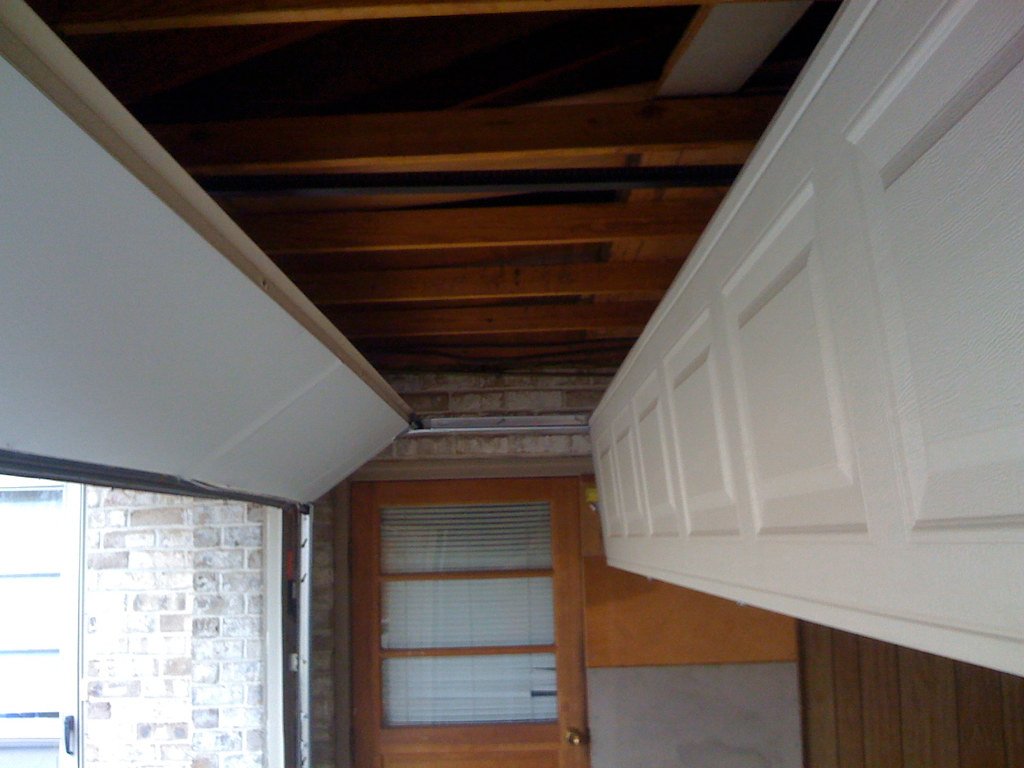
The door sits crooked in the opening, one corner dropped, a roller hanging loose. Every instinct says push it back. Here is why that instinct gets expensive.
It started with a crunch that no garage door should ever make. A homeowner had backed out in a hurry, caught the door’s bottom corner with his bumper while it was still coming down, and watched the whole door lurch sideways in its tracks. One side climbed. The other side dropped. By the time he got out of the car, the door was frozen at an angle, groaning against the opener.
His first instinct was the same one I hear about constantly. Grab the low corner and shove it back into line. He even got a shoulder under the door before his wife stopped him. Good thing she did. An off track door is not a door that needs a push. It is a heavy machine hanging by cables under spring tension, and pushing it is how panels bend, tracks tear off the wall, and people get hurt.
The short version
- An off track door is a stopped door. Do not run the opener and do not force it.
- Usual causes: a vehicle bump, a snapped cable, worn rollers, or an obstruction.
- Stabilize means keep people clear and leave the door exactly where it sits.
- Forcing it back bends panels and tracks and turns a reseat into a rebuild.
- A professional reseat checks cables, rollers, and tracks before the door moves again.
How Does a Garage Door Come Off Its Track?
Start with how it normally stays on. Rollers attached to each panel ride inside steel tracks on both sides of the opening, and lift cables keep both sides rising at the same speed. The whole system works because everything moves together, every single cycle.
Break the teamwork and the door leaves the track. The most common cause is a vehicle clipping the door while it is moving. Second is a snapped lift cable, which lets one side drop while the other side keeps climbing. Third is worn or cracked rollers that finally pop out of the track under load. Fourth is an obstruction, a broom handle or a trash can sitting in the door’s path, that stops one corner while the opener keeps pushing the rest. Each cause leaves a different damage pattern, and it tells the technician where to start.
A snapped cable drops one side at once — see our garage door cable repair in Rochester, NY.
What Should You Do in the First Two Minutes?
Stop the opener. If the door is moving crooked, hit the remote or the wall button once to halt it, then unplug the opener entirely. An opener does not know the door has left the track. Modern openers from LiftMaster have force settings, not eyes, and left running one will cheerfully fold a panel or tear a track off the wall.
Then clear the area. Nobody walks under any part of that door, and nobody stands in the doorway. Get kids and pets inside the house. Whatever is trapped in the garage, the car included, stays put. A crooked door is a loaded structure held in a position it was never designed to hold, and your only job in the first two minutes is making sure nothing and nobody is underneath it.
How Do You Stabilize It Without Forcing It?
Stabilize means keep it from getting worse. It does not mean fix it. If the door is fully closed and resting on the floor, you are already stable. Leave it down, leave the opener unplugged, and secure the rest of the house as normal. A closed door cannot fall any further.
If the door is stuck partway up, do not try to lower it and do not try to raise it. If you can reach a track safely from the side, without ever standing under the door, a pair of locking pliers or a C-clamp fixed onto the track just below a roller can slow a slide. If reaching the track means getting under the door, skip it completely. Block off the area, bring anything valuable inside, and treat the call as urgent. The technician will clamp and control that door with the right gear before anything moves.
Why Is Forcing It Back the Worst Move You Can Make?
Because steel panels bend long before they cooperate. A sectional door is a chain of hinged panels, and a crooked one is wedged in place, not just misaligned. Shoving the low corner loads the hinge line, crumples panel edges, and can pull rollers straight through the lip of the track. The tracks themselves are thin steel held by brackets screwed into the framing, and every pound of force you apply travels directly into those brackets.
The bill tells the story. A simple reseat is one labor visit. A forced door adds bent panels, a replacement track section, and sometimes a door that never seals straight again. Homeowners who wait keep the cheap version of this repair. Homeowners who shove end up buying the expensive one.
What Is the Cable Danger Nobody Sees?
Look at the sides of the door from a distance, and you may spot it: a lift cable hanging loose, or wound in a messy nest on the drum above the door. A snapped cable is the most common hidden cause of an off track door, and it changes the danger of the whole situation completely.
Those cables connect to the bottom brackets of the door, and the entire chain sits under full spring tension. I covered this in detail in why a snapped cable is not a DIY fix, and the rule applies here word for word. Never grab a loose cable, never try to rewind one onto its drum, and never loosen a bottom bracket. The cable is the reason that side of the door dropped, and it is loaded enough to be the reason somebody gets hurt next.
What Does a Professional Reseat Actually Involve?
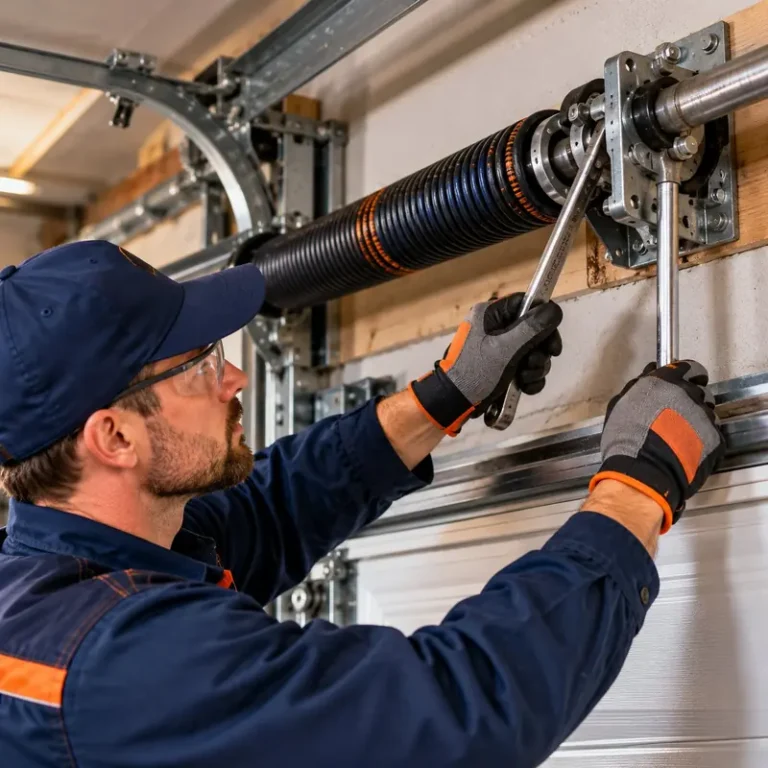
The technician starts by securing the door with clamps so nothing moves unplanned. Then the spring tension gets managed properly, because you cannot safely reseat rollers while the whole system is fighting you. The cause gets fixed first: a new matched cable pair, fresh rollers, or a straightened or replaced section of track. Only after that do the rollers go back into the tracks, one panel at a time, with the door walked up and down by hand.
Afterward comes the testing you should insist on: a balance test, a full travel check, and a safety reverse test with the opener reconnected. That sequence is exactly how a professional visit runs on every call, and it is how our garage door repair team in Rochester, NY works through an off track door without turning it into a bigger and pricier job.
What Will It Cost to Fix, Roughly?
Most homeowners report paying roughly $150 to $350 for a straightforward reseat where the tracks and panels survive undamaged. Add a snapped cable pair or a set of replacement rollers and the visit typically lands between $250 and $450, parts and labor included. Bent track sections or a damaged panel push the number higher, and a badly folded door can start approaching replacement territory.
The variable is almost never the reseat itself. It is what caused the derailment and what got damaged on the way down. That is one more reason to leave the door untouched: every part that survives keeps your number at the low end.
Off Track Questions, Answered
The questions homeowners ask while staring at a crooked door.
Please do not. A crooked door is wedged under load, not loosely out of place. Pushing the low corner bends panel edges, tears rollers through the lip of the track, and can rip track brackets straight off the framing. Worse, the door is still connected to cables under full spring tension, and a sudden shift can release that tension in ways nobody can predict. What looks like a five minute shove is the most common way a simple reseat becomes a full rebuild.
Four causes cover most calls. A vehicle clips the door while it is moving, even at parking speed. A lift cable snaps and one side drops while the other side keeps climbing. A worn or cracked roller finally pops out of the track under load. Or something sits in the door’s path, a ladder, a bin, a snow shovel, and stops one corner while the opener keeps driving the rest. A technician reads the damage pattern to find which one happened before reseating anything at all.
It depends on the position it stopped in. A door that is fully closed and resting on the floor is stable and secure, and it can wait safely for a morning appointment. A door stuck partway open is a different story, and do not sleep on that one if you can help it. Keep the opening clear, move valuables inside the house, and say the word hanging when you call, because a partially raised crooked door can shift or drop without any warning.
Not safely by force, no. If the door is nearly closed and moves freely by hand after you disconnect the opener, guiding it the last few inches is one thing. But a door that resists, grinds, or sits visibly crooked in the opening should never be pushed down. Forcing it can fold a panel and leave the opening less secure than it was, not more. If security is the worry, lock the door between the garage and the house and treat the repair as urgent.
Because the two sides of the door are lifted by separate cables, and they only stay level while both cables share the load. When one cable snaps, frays off its drum, or loses its tension, that side loses its lift while the working side keeps pulling upward. Gravity does the rest, and the door racks sideways in the tracks. A one sided drop is the classic fingerprint of a cable failure, which is why a technician checks cables and drums before reseating a single roller.
Most straightforward reseats take one to two hours. The door gets clamped and secured, the cause of the derailment is repaired, rollers go back into the tracks panel by panel, and the door is tested by hand before the opener reconnects. Add time when a cable pair, rollers, or a track section needs replacing. If the panels bent during the derailment, the conversation changes from reseating to panel repair, and an honest technician will show you that damage before quoting anything.
Most homeowners report roughly $150 to $350 for a reseat with no parts needed beyond hardware. A snapped cable pair or a set of new rollers usually brings the visit to $250 to $450, parts and labor included. Replacing a bent track section or a damaged panel costs more, and severe damage can make a new door the smarter spend. Get one total price in writing after the inspection, and be suspicious of any firm quote given over the phone, sight unseen.
Fix the cause and the prevention mostly handles itself. Fresh cables and rollers remove the two most common triggers. Keep the track area clear of bins, ladders, and tools so nothing can block a corner mid travel. Look at your rollers twice a year for cracks and wobble, and listen for new grinding noises, a roller asking for help. And slow down at the doorway. Most vehicle bumps happen when somebody reverses before the door has fully opened or finished closing.
The Bottom Line
An off track door rewards patience and punishes force, every single time. Leave it exactly where it sits, keep everyone clear of it, and the repair stays the cheap version: a reseat, the cause fixed, and a door that runs straight again.
If yours is hanging crooked right now, garage door repair across Rochester can reseat it and check the tracks. And if you want to know what you are paying for before anyone arrives, why homeowners choose us covers the pricing discussed before work begins and the stocked truck that make a reseat a one visit job.
Need this fixed? See our garage door off track repair in Rochester, NY and call to confirm availability.
Door Off Track? Leave It to a Pro
One call, a price agreed first, and a door secured, reseated, and safety tested in a single visit.
Call (866) 727-0060