My Garage Door Spring Just Snapped — What to Do First
It sounds like a gunshot, then silence, then a door that suddenly weighs more than you do. Here is the first-hour playbook, so a bad morning stays a small repair.
The bang woke the whole house at 5:40 in the morning. My neighbor stood in his garage in slippers, coffee in hand, staring at a door that would not move. The opener hummed when he hit the remote. The door just sat there like it had been poured from concrete. He was sure the motor had died. It had not. The torsion spring above the door had snapped in two, and the coil had a gap in it wide enough to fit two fingers.
That sound fools everyone the first time. A snapping torsion spring releases its stored energy all at once, and the crack echoes off concrete and drywall like a rifle shot. Then comes the confusing part. The opener still lights up. The motor still runs. Everything looks normal except the one thing that matters, because the spring does most of the actual lifting on every door.
The short version
- A loud bang plus a door that will not move almost always means a snapped spring.
- Look for a visible gap of an inch or two in the coil above the door.
- Stop pressing the remote. Every attempt strains the opener against dead weight.
- Never stand under the door or try to force it open by hand alone.
- A professional replacement on a standard door typically runs $300 to $550 all in.
Did That Bang Really Come From the Spring?
Springs rarely die quietly. A torsion spring is wound steel under serious tension, and when the metal finally fatigues, it lets go in one instant. The ends of the broken coil slam against the shaft and the wall, and that impact is the bang you heard. Extension springs make a similar crack, followed by a clatter as the broken piece drops along the track.
Not every loud noise is a spring, but the difference shows up in the next thirty seconds. If the noise came from the spring, the door will not open more than an inch or two, no matter how healthy the opener sounds. Treat the bang as a diagnosis to confirm, not a conclusion.
How Can You Confirm It Without Touching Anything?
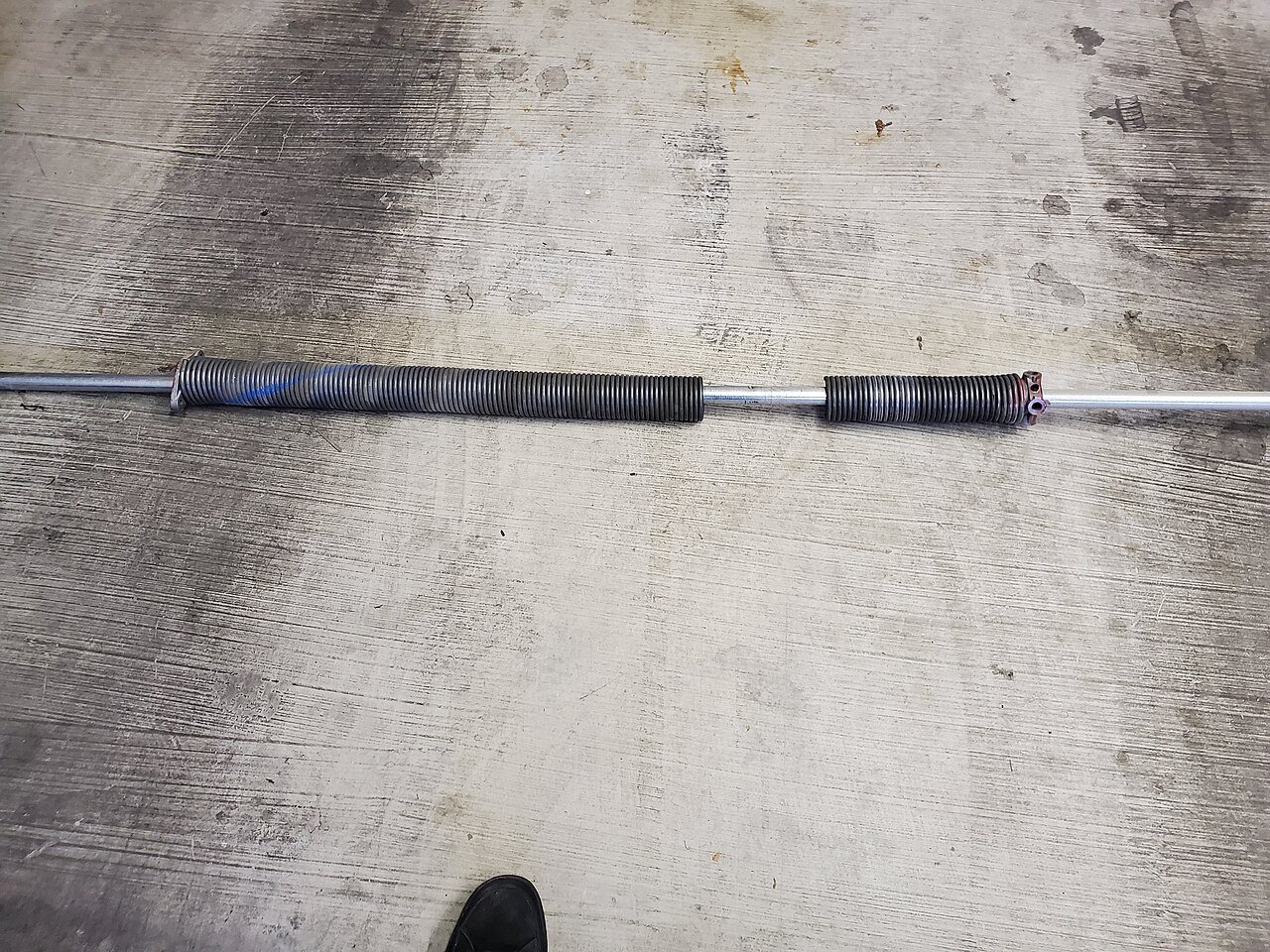
Stand inside, door closed, and look up. On a torsion setup, find the long coil on the shaft above the center of the door. A healthy spring is one continuous coil. A broken one shows a clean gap, usually an inch or two wide, where the coil separated. Shine your phone flashlight along it if the light is poor.
Extension springs run along both horizontal tracks instead. A broken one hangs stretched out and limp, or lies in pieces on the floor. The DASMA safety guidance explains how to identify spring systems without touching them, and it is worth two minutes before you reach for a tool.
One more test, and it needs no tools. Pull the red emergency release cord and try to lift the door a few inches. A door with a working spring feels surprisingly light. A door with a broken spring feels like lifting a piano, because you are. Let it back down gently.
What Should You Do in the First Five Minutes?
First, stop pressing the remote. The opener was built to guide a balanced door, not to dead lift 150 to 250 pounds of steel. Every cycle against a broken spring grinds the drive gear and overheats the motor. Unplug the opener so nobody in the house restarts it by habit.
Second, keep people and pets out of the garage. A door held up by nothing but habit can drop without warning. Third, leave the door exactly where it sits. Do not prop it, wedge it, or try to muscle it up for one quick trip out. Fourth, note what you see: the gap in the coil, whether the door sits level or crooked, any cable hanging loose. Tell the technician when you call.
What Should You Never Touch on a Broken Door?
Everything connected to the springs is off limits. The winding cones at the ends of the torsion spring, the set screws that lock them to the shaft, the cable drums, and the bottom brackets where the lift cables attach. Those parts hold back the full stored tension of the system, and loosening the wrong one releases it all.
I wrote a full breakdown of whether replacing a garage door spring yourself is ever a good idea, and the short version is no. Winding bars in trained hands are a tool. In anyone else’s hands they are a lever attached to a loaded spring. Look all you want. Touch nothing under tension.
What If Your Car Is Trapped Inside?
If the car truly has to get out, there is one careful option. With a second adult, pull the release cord and lift together using the door handle, keeping your bodies to the sides of the doorway and never under the door. If it rises, one person holds it fully open while the other backs the car out. Then lower it the same way, together, and let it rest on the floor.
If the door will not budge with two people, stop. Do not add a third person, a car jack, or a pry bar. In that case the car waits for the technician, and the visit itself usually takes one to two hours once it starts.
How Do You Secure the Garage Until Help Arrives?
A closed door with a broken spring is actually secure. It is far too heavy for anyone to lift from outside, so leave it down and lock up the house as normal. If the door stopped partway open, do not force it down. Keep the opening clear, stay out from under it, and bring anything valuable inside the house until the repair is done.
Leave the opener disengaged, and note whether the door sits straight or crooked in the opening. A crooked door hints at a cable problem alongside the spring. That single detail can change what the technician loads onto the truck before he leaves the shop.
A crooked door can mean a cable fault too — see our garage door cable repair in Rochester, NY.
What Does a Professional Spring Visit Look Like?
The visit follows a set pattern. The technician weighs the door and measures the broken spring, because the replacement has to match the door’s actual weight, not just the old spring’s faded label. On a two spring door, both springs come off and a matched pair goes on. The new springs are tensioned in controlled quarter turns, and then the door gets a balance test, a cable inspection, and a safety reverse check before the opener runs again.
You can read how a professional visit works, step by step before anyone arrives. And when you call our garage door repair team in Rochester, NY, that is the sequence you are booking, not a guess and a prayer.
What Will the Fix Cost, Roughly?
Most homeowners report paying roughly $300 to $550 for a standard torsion spring replacement, parts and labor included, and $250 to $450 for an extension spring pair. Heavy wood doors, high lift tracks, and added cable work push the number up. Anyone far below that range is guessing at your spring size, and anyone far above it should be ready to itemize.
I broke down the pricing picture in what a spring replacement should actually cost, including the red flags of a padded quote. The short rule never changes: one total price, in writing, before any wrench turns.
Snapped Spring Questions, Answered
The questions homeowners ask in the first hour after the bang.
Most people describe a single loud bang, like a gunshot or a firecracker going off inside the garage. A torsion spring stores hundreds of foot pounds of torque, and when the coil fatigues and separates, that energy releases in one instant. The sound often happens at night or early in the morning, when temperature shifts stress the metal most. If you hear it and the door then refuses to open more than an inch or two, you have your answer.
Carefully, and only if you truly must. Pull the red emergency release cord first so the opener is disconnected. A standard double door without spring help weighs 150 to 250 pounds, so this is a two adult job, lifting by the handle and never standing under the door. If it will not rise with two people, stop there. Forcing it can bend the top panel or drop the door. Most homeowners are better off leaving it closed until a technician arrives.
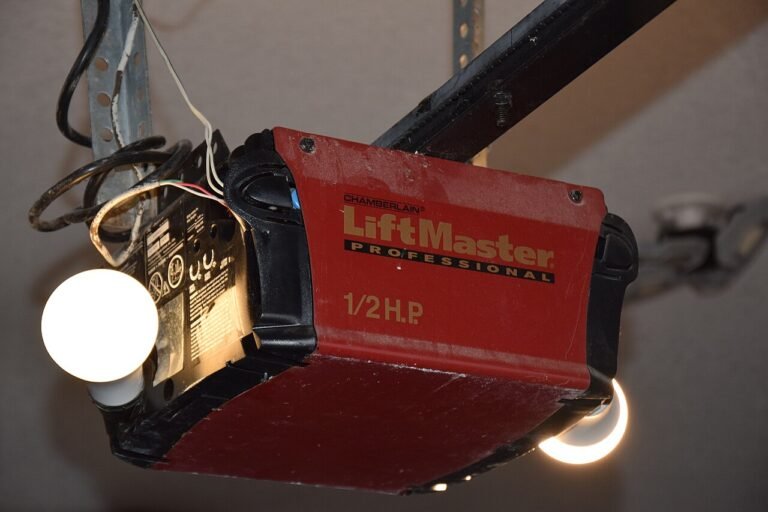
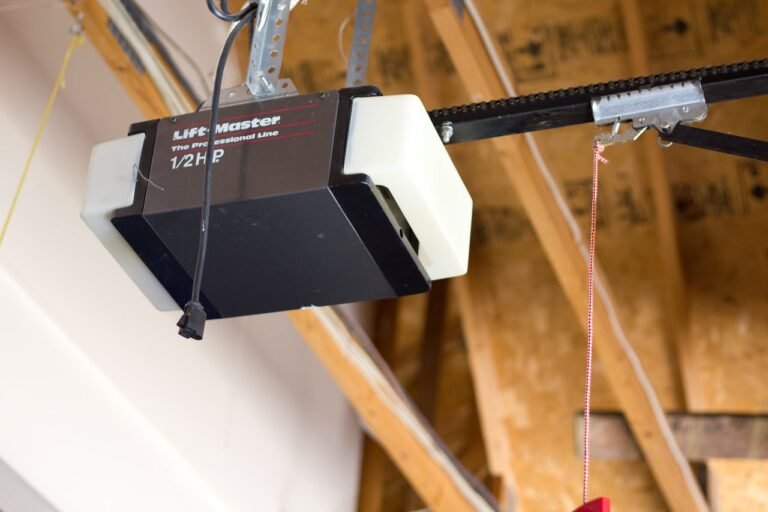
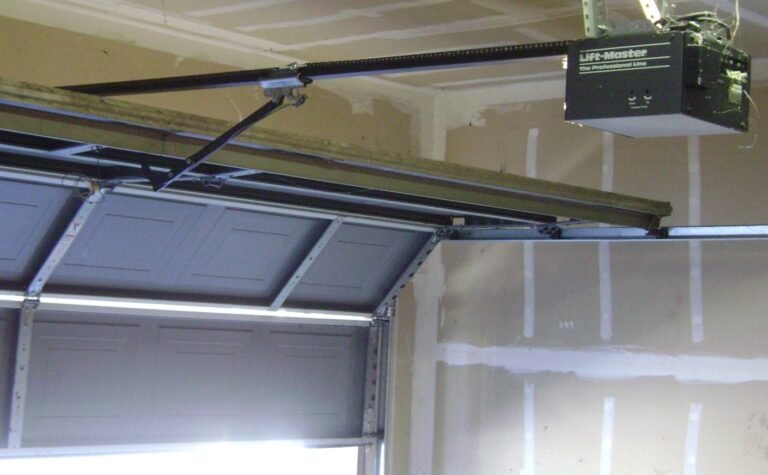
No. One press to confirm the problem is enough. The opener is designed to guide a balanced door, not to lift dead weight off the floor. Every extra cycle strains the motor, overheats the unit, and chews through the nylon drive gear that most LiftMaster, Chamberlain, and Genie openers use as a sacrificial part. Keep cycling it and a spring job quietly becomes a spring plus opener job. Unplug the opener so nobody in the house restarts it by habit.
Do two checks that need no tools. First, look at the coil above the door. A visible gap of an inch or two in the coil means the torsion spring has separated. Second, pull the release cord and lift the door by hand a few inches. If it feels extremely heavy, the spring is gone, because the spring normally carries nearly all the weight. If it lifts easily by hand but not under power, the opener itself becomes the suspect.
Keep everyone away from the opening and never walk under the door. A door stuck open with a broken spring is held up by friction and luck, and it can drop fast and without warning. Do not pull it down by the cables and do not hang any weight on it. Bring valuables inside the house, leave the opener disconnected, and treat the call as urgent. A technician can clamp the door, control its descent, and make it safe for you.
He can, but on a two spring door it is usually a poor deal. Both springs share the same cycle count, so the surviving spring is near the end of its rated life too. Replacing both at once adds mostly parts cost, typically $75 to $150, because the labor is already happening on that same visit. Replacing one now means paying for two complete visits. The real exception is a spring that was replaced recently, with a receipt or invoice to prove it.
Most standard jobs run one to two hours from arrival to final test. The spring swap itself is the quick part. The time goes into weighing the door, matching the spring size and cycle rating, tensioning in careful quarter turns, checking cables and rollers, and running the balance and safety tests. If a quote promises twenty minutes in and out, steps are being skipped somewhere. Skipped steps on a spring job tend to show up later as noise, imbalance, or a callback visit.
Metal fatigue, mostly. A standard spring is rated for about 10,000 cycles, and one cycle is one open plus one close. At four uses a day, that works out to roughly seven to ten years of service. Cold weather, rust on the coils, and a lack of lubrication all shorten that life. Springs often let go during the coldest stretch of the year, when the steel is brittle and the old lubricant is stiff. It rarely means you did anything wrong.
The Bottom Line
You heard the bang, you confirmed the gap in the coil, and you left the door alone. That already puts you ahead of most people, because the expensive mistakes happen in the first hour, when frustration talks homeowners into forcing a 200 pound door against a loaded spring system.
One call gets you a weighed door, a matched spring pair, and a full safety test. If you want the details first, read why homeowners choose us, then book garage door repair across Rochester and get the car out.
Need this fixed? See our garage door spring repair in Rochester, NY and call to confirm availability.
Spring Snapped? Get It Fixed Safely
One call, one price agreed first, and a door that lifts like it should. Most spring jobs finish in a single visit.
Call (866) 727-0060